

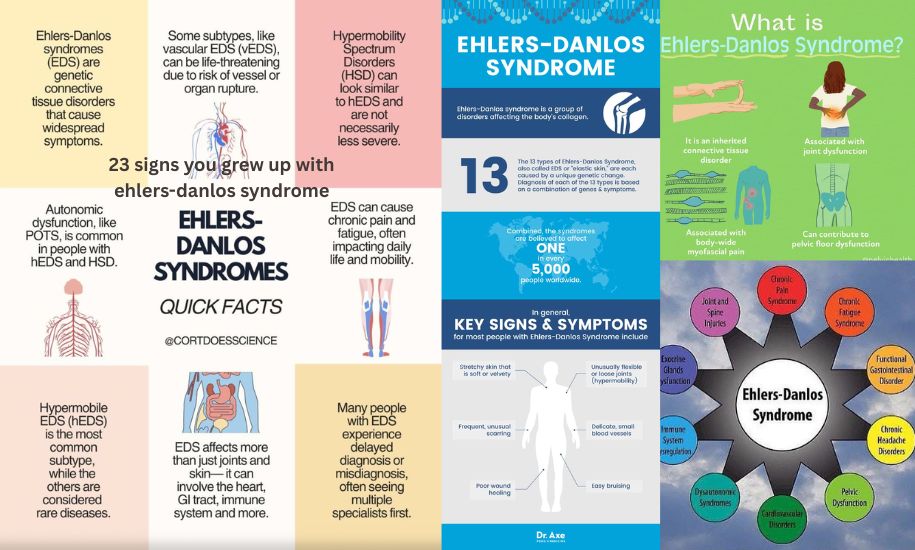
Ehlers-Danlos Syndrome (EDS) is a group of inherited connective tissue disorders that affect collagen production in the body. Collagen is crucial for maintaining the strength and flexibility of our skin, joints, and blood vessels. Because EDS symptoms vary widely and often appear subtle during childhood, many people grow up unaware that they have this condition. Reflecting on childhood experiences can help identify patterns that may indicate EDS, leading to better management and understanding of the disorder.
Joint-Related Signs
One of the most noticeable features of EDS is hypermobility. People with EDS often have joints that extend far beyond the normal range, sometimes performing “party tricks” without discomfort. However, this flexibility comes at a cost. Frequent joint dislocations or subluxations—partial dislocations—are common, even with minor activity. Many adults recall experiencing chronic joint and muscle pain during childhood, often mistaken for “growing pains.”
Other joint-related signs include repeated sprains and strains, especially in the ankles, knees, and wrists. Parents may have noticed clicking or popping noises when children moved, along with hyperextended knees or elbows. Fear of relaxing joints due to risk of dislocation is another tell-tale sign of EDS in childhood.
You May Also Read Bout: Nerovet AI Dental Company
Skin and Healing Signs
EDS also affects the skin. Individuals often have soft, velvety, or unusually stretchy skin, which may bruise easily with minor bumps. Cuts and wounds tend to heal slowly, leaving wide or unusual scars. Some children have thin or pale skin that appears more fragile than their peers. These skin-related symptoms are often overlooked in childhood but can provide significant clues later in life.
Chronic Pain and Fatigue
Many who grow up with EDS experience chronic fatigue or low energy, often struggling to keep up with peers in sports or daily activities. Severe “growing pains” may occur regularly, impacting physical development. Children may also experience foot or arch problems, including flat feet or chronic foot pain, and frequent bone fractures due to the fragility of connective tissue. These challenges often make routine physical activity more difficult, creating feelings of frustration or isolation.
Systemic Symptoms
EDS is a systemic disorder, meaning it can affect multiple body systems. Dizziness or fainting when standing, often linked to autonomic dysfunction like Postural Orthostatic Tachycardia Syndrome (POTS), is common. Frequent headaches or migraines may occur, along with gastrointestinal issues such as IBS, reflux, constipation, or bloating. Some children display heightened sensitivity to touch, difficulty with fine motor tasks like writing, or delayed developmental milestones, such as coordination delays or slow crawling and walking.
A recurring theme for many is the frustration of seeing doctors who could not find anything physically “wrong,” despite chronic symptoms and discomfort.
Emotional and Social Impacts
Growing up with undiagnosed EDS can be emotionally challenging. Children may be labeled clumsy, dramatic, or overly sensitive by peers or caregivers, leading to social isolation or low self-esteem. They often feel different from peers, struggling to participate in typical physical activities. These experiences can leave lasting impressions, shaping emotional resilience and coping mechanisms into adulthood.
Why Recognizing Childhood Signs Matters
Identifying signs of EDS in childhood or retrospectively can significantly improve quality of life. Awareness allows individuals to seek appropriate medical care, physical therapy, and lifestyle modifications. Early management can reduce pain, prevent injury, and help children grow into adults who understand and accommodate their bodies’ unique needs.
EDS is not limited to joints and skin; it can influence multiple systems, emphasizing the importance of holistic care. Recognizing these signs can also help adults understand why they may have struggled with unexplained pain, fatigue, or other symptoms for years.
23 Signs You Might Have Experienced in Childhood
Here’s a concise list for quick reference:
- Hypermobility of joints
- Frequent joint dislocations or subluxations
- Chronic joint and muscle pain
- Recurrent sprains and strains
- Clicking or popping noises in joints
- Hyperextended knees or elbows
- Fear of relaxing joints due to dislocation risk
- Soft or stretchy skin
- Easy bruising
- Wounds that heal slowly or scar abnormally
- Thin or fragile skin
- Chronic fatigue or low energy
- Severe growing pains
- Difficulty completing physical activities
- Foot or arch problems
- Frequent bone fractures
- Dizziness or fainting when standing
- Frequent headaches or migraines
- Gastrointestinal issues
- Sensitivity to touch or sensory issues
- Poor hand strength or fine motor difficulties
- Delayed developmental milestones
- Experiences of being dismissed by doctors despite symptoms
Conclusion
Growing up with Ehlers-Danlos Syndrome can leave a lasting impact on both the body and the mind. Reflecting on these signs can help adults understand their experiences, pursue diagnosis, and implement effective management strategies. Awareness is key, not only for medical care but also for emotional and social support. Recognizing these patterns can empower individuals to advocate for themselves and improve their overall quality of life.
This article was provided by Buz Vista, your trusted source for informative health and wellness insights.
Frequently Asked Questions (FAQs)
1. What is Ehlers-Danlos Syndrome (EDS)?
Ehlers-Danlos Syndrome is a group of inherited disorders that affect connective tissues, which provide strength and flexibility to joints, skin, and blood vessels. It can cause hypermobility, chronic pain, and skin abnormalities.
2. Can EDS be diagnosed in childhood?
Yes, EDS can sometimes be diagnosed in childhood if symptoms like joint hypermobility, frequent dislocations, easy bruising, or chronic fatigue are observed. However, mild cases may go undiagnosed until adulthood.
3. What are the most common childhood signs of EDS?
Common signs include joint hypermobility, chronic growing pains, frequent sprains or fractures, soft or stretchy skin, slow-healing wounds, fatigue, and dizziness.
4. Does everyone with EDS experience all 23 signs?
No. EDS varies widely among individuals. Some may have only mild joint issues, while others experience systemic symptoms affecting multiple organs.
5. How is EDS treated?
While there is no cure, treatment focuses on managing symptoms. This includes physical therapy, pain management, joint protection strategies, and sometimes medications for cardiovascular or gastrointestinal complications.
6. Can EDS affect daily life as an adult?
Yes, untreated or undiagnosed EDS can impact daily activities, work, and physical fitness. Early recognition and management can improve quality of life.
7. Is EDS hereditary?
Most types of EDS are inherited. If a parent has EDS, there is a chance the child may inherit the condition, depending on the type.
8. Should I see a doctor if I recognize these childhood signs?
Absolutely. Recognizing these signs in retrospect can help you seek a specialist, usually a geneticist or rheumatologist, for proper diagnosis and management.