

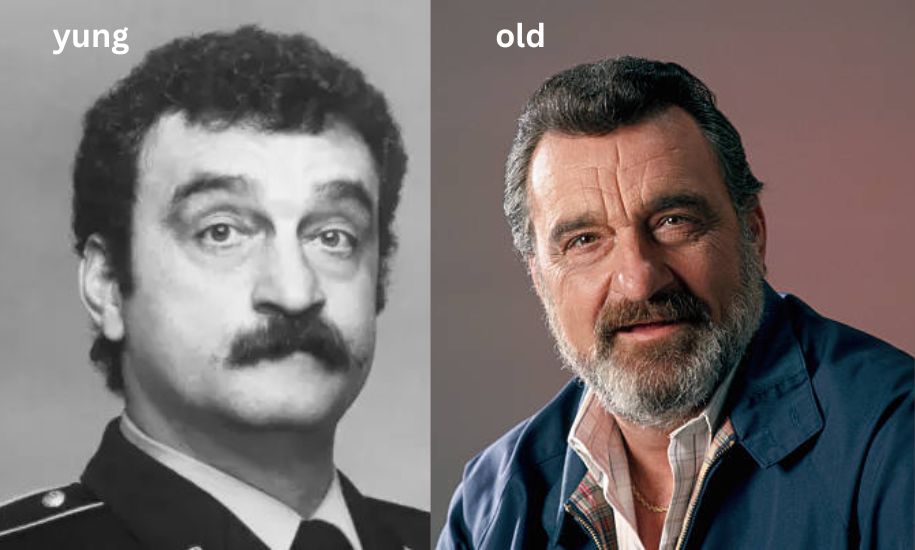
Few actors in American television history have undergone as remarkable a transformation as Victor French. From his earliest appearances as a tough, grimacing villain in dusty Westerns to his later portrayal of tender-hearted, moral-driven characters, French built a legacy rooted in authenticity, humility, and emotional depth. Over the course of more than three decades, he carved a path that few others could emulate—moving fluidly between acting, directing, and stage work while touching millions of hearts in homes across America.
This is the story of Victor French—his life, his art, and the human decency that turned a rugged cowboy actor into a symbol of compassion and strength on screen.
Early Life and Western Roots
Victor Edwin French was born on December 4, 1934, in Santa Barbara, California. Acting ran in his blood. His father, Ted French, was a stuntman and actor who worked on numerous Hollywood Westerns during the golden age of cowboy cinema. Growing up in that environment, Victor was steeped in the culture of Western storytelling—honor, struggle, redemption, and moral codes carried by simple men doing hard work.
As a child, Victor loved spending weekends watching matinee Westerns. Those black-and-white films, with their dusty saloons and horseback chases, left a mark on his developing imagination. Years later, he would tell interviewers that Westerns taught him the fundamentals of character—truthfulness, loyalty, and courage.
After graduating high school, French didn’t immediately leap into stardom. His route to acting was gradual and rooted in the physical craft of cinema. Like his father, he began working as a stuntman, sometimes doubling for established stars. The years spent around rugged sets and experienced crews taught him how the business worked—not just the glamour, but the hard, sweaty labor that went into making television and film magic.
Breaking Into Hollywood: The Villain Years
By the late 1950s, Victor French began appearing in minor screen roles, often cast as the “heavy.” His broad shoulders, thick mustache, and gruff facial expressions made him a natural choice for bandits, gunslingers, and roughneck antagonists.
He made early appearances on television classics like Gunsmoke, Bonanza, and other Western-themed shows that dominated American screens at the time. It was both a blessing and a curse—his rugged look got him plenty of work, but he was quickly typecast.
French once remarked that casting directors saw him as “the man to punch first,” rather than the hero. But his work ethic never faltered. He immersed himself in each role, delivering believable villains who were more than caricatures—they were men hardened by life. Even as he played the bad guy, French found nuance in his performances, showing flashes of humanity behind the scowl.
By the early 1960s, he was a familiar face to millions of television viewers, even if few could name him.
Transition to Character Actor
In an era when television actors often got stuck in one mold, Victor French quietly began to break free. His acting wasn’t showy or theatrical; it was grounded. He had a knack for making every gesture feel lived-in.
He studied the craft more seriously, joining and eventually becoming President and Artistic Director of the Company of Angels, a respected Los Angeles theatre troupe. There, French directed and acted in stage productions, gaining critical acclaim for his work in Twelve Angry Men, which won him a Los Angeles Drama Critics Circle Award.
These experiences reshaped his artistic philosophy. He saw acting not merely as entertainment, but as an exploration of truth and empathy. The stage demanded honesty—something French carried with him back into film and television.
“Little House on the Prairie” — A Career Reborn
In 1974, French’s career took a dramatic turn when he was cast as Isaiah Edwards on Little House on the Prairie, the beloved NBC series created by and starring Michael Landon.
Landon had known French from earlier collaborations and recognized the heart beneath his tough exterior. He saw in French the ability to portray not just grit, but tenderness—a kind of masculinity built on loyalty and compassion rather than dominance.
As Isaiah Edwards, a grizzled frontiersman with a heart of gold, French became a fan favorite. His friendship with Charles Ingalls (played by Landon) embodied a brotherly bond that resonated deeply with audiences.
The show, based on Laura Ingalls Wilder’s books, explored family, hardship, and faith. In that setting, French’s portrayal stood out: here was a man weathered by life, yet still capable of warmth, humor, and kindness. For many viewers, his character reflected the complexities of real men—flawed but striving for goodness.
Off camera, Landon and French shared a close friendship that would last until both their deaths. Landon became not just a collaborator but a creative partner and brother in arms.
Expanding Horizons: “Carter Country” and Directing Work
After leaving Little House in 1977, Victor French sought new challenges. He took the lead role of Chief Roy Mobey in the ABC sitcom Carter Country (1977–1979), which humorously examined small-town Southern politics. The show allowed him to display his comedic timing and leadership in front of the camera.
Meanwhile, French’s talents as a director blossomed. He directed several episodes of Little House on the Prairie and later Highway to Heaven. His directing style was known for emphasizing character interaction and moral clarity rather than flashy techniques.
Behind the scenes, he earned respect from cast and crew alike for his hands-on approach. He treated actors with empathy, knowing how challenging the industry could be.
Reunion with Michael Landon: “Highway to Heaven”
In 1984, Victor French reunited with Michael Landon for a new NBC series that would define the later years of his career: Highway to Heaven.
The show centered around Jonathan Smith (Landon), an angel sent to Earth to help people in need, and his human companion Mark Gordon (French). The series offered simple but deeply emotional parables about love, forgiveness, and faith.
French’s portrayal of Mark Gordon was tender, humorous, and profoundly relatable. Mark was no saint—he was a regular guy, often skeptical of Jonathan’s heavenly mission, but always willing to do what was right. His chemistry with Landon gave the show its emotional center.
Highway to Heaven ran for five successful seasons (1984–1989) and became one of NBC’s most beloved family dramas of the 1980s. For French, it represented not just another role, but a continuation of his lifelong exploration of morality and human decency.
As Landon later said, “Victor wasn’t just acting—he was living what he believed.”
A Philosophy of Life and Art
Victor French often spoke about the importance of truth in acting. He rejected vanity and Hollywood pretension, focusing instead on emotional honesty.
His characters, whether a rugged frontiersman or a small-town cop, shared an underlying humanity. He once said, “I’m not interested in being famous. I’m interested in being real.”
French believed that television, despite its commercial constraints, had a moral purpose—to teach empathy. This philosophy aligned perfectly with Landon’s approach to storytelling.
Together, they made family television that wasn’t sugar-coated. Little House and Highway to Heaven tackled subjects like addiction, loss, prejudice, and redemption. French’s performances gave those themes gravity.
His acting style was economical—he didn’t overplay emotion. Instead, a small smile, a sigh, or a slow shake of the head conveyed volumes.
Illness and Untimely Death
In 1989, during the final season of Highway to Heaven, Victor French was diagnosed with lung cancer. It was a devastating blow to fans and colleagues. He had been a heavy smoker for much of his life, and the disease progressed quickly.
Despite the illness, he continued to work as long as possible, committed to finishing what he started. His co-stars later remembered that even in pain, he maintained his humor and humility.
Victor French passed away on June 15, 1989, in Los Angeles, at just 54 years old. The loss was felt deeply across Hollywood and by millions of viewers who had grown up watching him.
Michael Landon delivered a heartfelt eulogy, describing French as “one of the truly good guys, on and off screen.” Just two years later, Landon himself died of pancreatic cancer, leaving behind a legacy intertwined with French’s own.
Legacy and Cultural Impact
Victor French’s influence can’t be measured merely in awards or filmography. His real legacy lives on in the emotional resonance of his work.
Little House on the Prairie continues to air in reruns around the world, introducing new generations to the warmth of Isaiah Edwards. Highway to Heaven, too, remains beloved for its optimism and faith in human goodness.
In 1998, nearly a decade after his passing, French was inducted into the Western Performers Hall of Fame at the National Cowboy & Western Heritage Museum—a fitting tribute to a man whose career began in the saddle.
Fans frequently write tributes celebrating his humanity. He is remembered not only as an actor but as a mentor, father, and friend who lived by the values his characters embodied.
Behind the Camera: The Director and Mentor
While audiences knew him for his acting, many colleagues remember French for his leadership off camera. He was generous with advice to younger actors, especially those struggling with self-doubt or typecasting.
During his years directing Little House episodes, French would often be seen working closely with crew members, ensuring every detail—from lighting to pacing—served the emotional truth of the story.
His directing emphasized intimacy. He preferred close-ups and long pauses, allowing actors to express inner conflict through silence rather than words. This approach helped Little House stand apart from other dramas of its time, giving it a cinematic tenderness rarely seen on television.
A Friendship Beyond Fame
Victor French’s partnership with Michael Landon remains one of television’s most heartfelt friendships. The two first met on the set of Bonanza and quickly developed mutual respect. Landon saw beyond French’s “villain image” and recognized a performer with rare depth.
Their friendship extended far beyond professional collaboration—they spent family time together, supported each other during hardships, and shared a vision for meaningful storytelling.
When French was offered other projects, Landon often found ways to bring him back. Their bond was built not on ego but on shared purpose: to make stories that uplifted people.
In many ways, Highway to Heaven was their mutual love letter to humanity—two men, one angelic, one earthly, walking side by side to help others.
Philosophy of Masculinity and Morality
In a Hollywood dominated by flashy heroism, Victor French offered something rare: gentle masculinity. His characters were strong but vulnerable, moral without being sanctimonious.
Isaiah Edwards’s rugged compassion or Mark Gordon’s wise-cracking kindness made viewers rethink what it meant to be a “man” on screen. He showed that sensitivity was not weakness—that empathy could coexist with strength.
Critics and fans alike have noted how French’s characters bridged old Western codes of honor with modern emotional awareness. He was, in essence, a cowboy philosopher of the television age.
Remembering Victor French Today
More than three decades after his death, Victor French remains a beloved figure in American pop culture. Reruns of Little House and Highway to Heaven continue to attract loyal audiences.
Online communities frequently revisit his episodes, praising his naturalistic acting and the moral grounding he brought to family TV. Fans often describe him as “the heart” of whichever show he was in.
Modern viewers, weary of cynicism, find comfort in his performances—proof that decency, faith, and perseverance never go out of style.
In interviews and retrospectives, cast members from both series still speak of him with deep affection. They remember a man who worked hard, laughed easily, and cared deeply about doing the right thing—both in his work and in life.
Lessons from Victor French’s Life
Victor French’s story offers timeless lessons for actors, artists, and ordinary people alike:
- Authenticity Over Image – He rejected Hollywood’s obsession with glamour, choosing substance over style.
- Growth Is Possible – He proved that an actor could escape typecasting and evolve, given determination and heart.
- Kindness Matters – On and off camera, his compassion defined his legacy.
- Art Can Heal – Through shows like Highway to Heaven, he demonstrated that television could inspire moral reflection, not just entertainment.
His life was not one of overnight success, but of steady, meaningful evolution. He grew from stuntman to star, from villain to angel’s companion—a trajectory symbolic of the human journey itself.
Conclusion: The Soul of a Gentle Giant
Victor French’s legacy is far more than a collection of roles—it’s a reflection of an era when television still sought to teach as well as entertain.
He embodied the timeless ideals of integrity, compassion, and redemption, and his partnership with Michael Landon created some of the most enduring moments in TV history. His grizzled smile, kind eyes, and soulful performances continue to inspire audiences decades after his passing.
In remembering Victor French, we remember the power of sincerity in art and life—the belief that every person, no matter how rough their exterior, holds a capacity for goodness.
Buz Vista proudly celebrates the enduring spirit of Victor French—an actor who turned every role into a mirror of humanity’s better angels.