

The Foundation and Essence of the Sounds Fishy Game: How It Transforms Social Play Into Unforgettable Moments
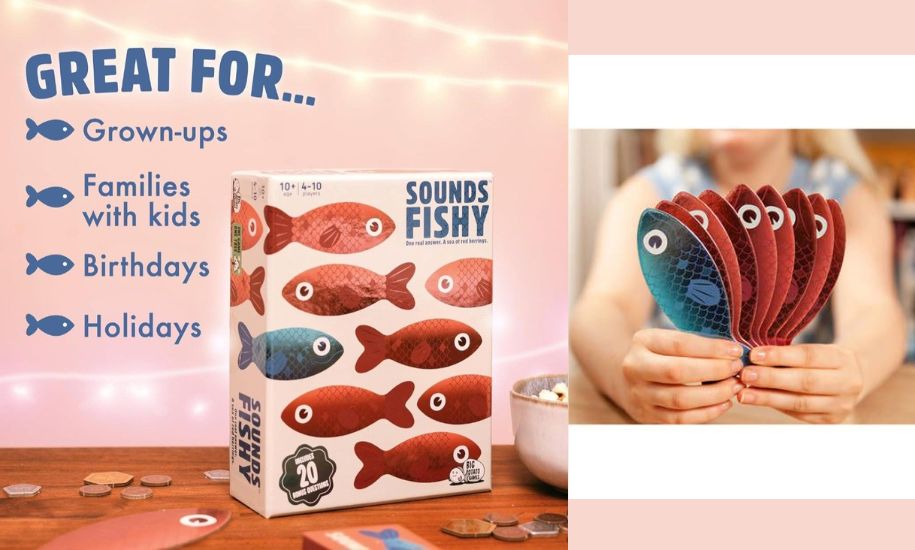
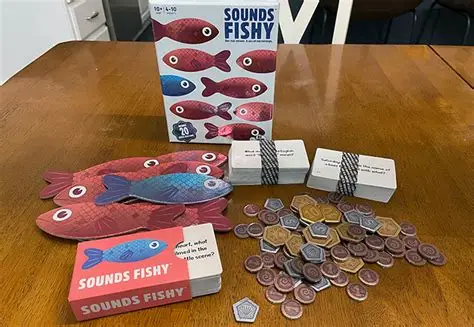
The Sounds Fishy game, created by Big Potato Games, stands as a masterclass in how modern party games can successfully merge wit, deception, laughter, and unpredictability. While many board games rely on strategy, trivia knowledge, or complex mechanics, Sounds Fishy disrupts traditional expectations by focusing instead on creativity, bluffing, and social psychology. This game removes the intimidating layer of competitive expertise and replaces it with a format where anyone—regardless of skill, age, or familiarity with gaming—can immediately jump in and shine. The simplicity of the game’s premise is misleading: one player becomes the Guesser, and the rest receive either a Blue Fish tile or various Red Herring tiles. The Blue Fish holder must provide the real answer to the question on the card, while the Red Herrings invent believable lies on the spot. At first glance, the rules appear light and playful, yet beneath them lies a fascinating system of improvisation, strategic bluffing, and intuitive deduction.
The real charm of Sounds Fishy lies not merely in the act of guessing but in how each player becomes a storyteller, performer, or poker-faced trickster. The moment a question card is drawn—perhaps something obscure, strange, or unexpected—the players with hidden roles mentally prepare to deceive or reveal. The Blue Fish player must offer the truth in a manner that blends into the others without raising suspicion, while the Red Herrings must craft fake answers that appear plausible enough to pass as the truth. The mechanics force every participant to think fast, improvise, and analyze the social cues of those around them. The Guesser becomes the temporary leader of the round, weighing individual personalities, watching body language, and attempting to spot inconsistencies in tone or logic. This interplay forms the essence of the game’s strength: it elevates human interaction into a core mechanic. No two rounds ever feel alike, even with the same players, because the emotional dynamics shift based on confidence, creativity, deception skill, and the unpredictability of human behavior.
Moreover, the game’s accessibility transforms it into a universal crowd-pleaser. Whether it’s being played at a family gathering, a casual meetup among friends, or a lively party where people hardly know one another, Sounds Fishy breaks down social barriers almost immediately. The trivia questions don’t require special knowledge, making the truth just as random—sometimes even as absurd—as the lies. This levels the playing field and ensures that no single player dominates repeatedly. Everyone has an equal opportunity to contribute something unique, whether it’s a cleverly crafted answer, a hilarious attempt at lying, or an unexpectedly accurate deduction. Its design encourages participation rather than passive observation, pulling even shy players into the center of the action. The speed at which rounds progress keeps the energy alive, preventing any downtime or boredom. As players rotate through roles, each gets to experience the thrill of fooling others, the suspense of flipping tiles, and the dramatic moment when the Blue Fish is revealed. This combination of inclusivity, creativity, and interactive psychology is what has solidified Sounds Fishy as a standout modern party game that continues to grow in popularity across gaming communities.
The Strategic Depth, Social Psychology, and Comedic Chemistry That Shape the Sounds Fishy Game Experience

What elevates Sounds Fishy from a casual party game to a powerful social-interaction engine is its multilayered strategic and psychological dimension. While the rules appear simple, experienced players quickly discover that crafting the right lie is both an art and a mental game. Every Red Herring must make a decision the moment the question is revealed: Should they offer a lie that is simple and straightforward, hoping to blend in? Or should they craft something strangely specific that feels authentic? The balance between subtlety and believability becomes a key strategy. Often, the best lies are not the cleverest ones—they’re the ones that mimic the natural pattern of a typical trivia answer. A comedic player might try to derail the round with absurdity, while a strategic player tries to “hide in plain sight.” The Blue Fish, too, must learn finesse; giving the truth in a confident but not overly assertive way is harder than it seems. Too much enthusiasm might give away the truth, whereas too little might make the Guesser suspicious. This delicate balance creates a psychological playground where each round becomes a metaphorical chess match hidden behind laughter.
The Guesser’s role is equally dense with nuance. A good Guesser doesn’t simply listen to the answers—they observe the faces, the pauses, the nervous chuckles, and the confident deliveries. Guessers soon learn that personality is as much a clue as the content of the answers. A usually reserved friend offering an oddly elaborate explanation may raise alarms. A naturally confident player offering a vague response may feel suspicious. Sometimes overthinking leads to hilarious failures, especially when the Guesser confidently flips a tile they were certain was a lie only to find the Blue Fish staring back at them. The risk-reward system gives every decision weight. The Guesser can stop at any time and bank their points, but greed often keeps them flipping until a dramatic loss brings the room into chaos. These moments make Sounds Fishy not only a game but a shared experience—filled with tension, anticipation, and explosive laughter when the unexpected happens.
Group chemistry transforms Sounds Fishy into an ever-shifting social experiment. With the right mix of personalities, the game becomes far more than a series of questions—it becomes an ongoing narrative filled with running jokes, memorable lies, and moments of collective disbelief. Creative players may build entire stories around their answers, causing laughter even before the guessing begins. Competitive groups may try to establish consistent patterns or psychological traps to trick each other. Family groups often find joy in observing how well they actually know one another—discovering who lies too easily or who gives themselves away through body language. Every group brings its own energy to the table, which means Sounds Fishy adapts effortlessly to any setting. It thrives at parties because it encourages lively engagement; it works in quieter environments because the challenge of reading people becomes more intense. Its ability to shift tone—from riotous comedy to intricate deception—makes it a versatile staple in the world of party games.
Cultural Impact, Replay Value, Community Reception, and Why the Sounds Fishy Game Continues to Grow in Popularity
The ongoing popularity of the Sounds Fishy game is no accident. The modern gaming community has shifted toward experiences that create memories, spark conversation, and get people interacting authentically even in a world increasingly dominated by digital entertainment. In this landscape, Sounds Fishy stands out as a refreshingly human experience—one that relies on instinct, improvisation, and shared humor. Reviews across blogs, YouTube channels, board-game communities, and casual gaming sites highlight how the game consistently becomes the center of attention during gatherings. Many describe it as a “top-tier icebreaker,” “a game that gets funnier the longer you play it,” or “the kind of party game that doesn’t leave anyone sitting on the sidelines.” It leaves a lasting impact because it makes every player part of the unfolding story, whether through a clever lie, a suspicious glance, or a confident deduction that backfires spectacularly.
Replayability is one of its strongest advantages. Although the game includes many question cards, the true depth of replay value comes not from the questions themselves but from the unpredictability of human creativity. Even when the same question appears again, the answers will never be identical. A group that played seriously before may approach it humorously the next time. A previously nervous player may gain confidence and start crafting excellent lies. These dynamics give Sounds Fishy a nearly limitless lifespan. As long as players are willing to be imaginative and playful, new stories, new jokes, and new surprises emerge every time. Many reviewers also emphasize how well it scales across group sizes—something that can make or break a party game. With small groups, the game becomes intimate and strategic. With larger groups, it becomes chaotic, loud, unpredictable, and immensely fun. Few games manage to perform equally well in both environments.
Another compelling reason for its sustained popularity is its family-friendly nature. While the game is humorous and sometimes silly, it rarely crosses into inappropriate territory, making it easy to include children, teenagers, adults, and elderly family members in the same session. This gives the game a wide demographic appeal and makes it suitable for holidays, reunions, vacations, and casual hangouts. Companies also use it for team-building activities because it naturally encourages communication, spontaneity, and observation. In an era where so many forms of entertainment isolate individuals into screens or private experiences, Sounds Fishy rebuilds the joy of playing together in the same room, responding to each other’s energy, and creating shared laughter that people remember long after the game ends.
Ultimately, the Sounds Fishy game has earned its place among the most beloved party games of recent years because it understands something fundamental about human interaction: people love to be playful, they love to be clever, and they love the thrill of trying to fool their friends. Its balance of simplicity and depth, humor and strategy, truth and deception, makes it universally appealing. It is not merely a trivia game nor simply a bluffing game—it is a hybrid experience that activates creativity, social skills, emotional intelligence, and spontaneity. Whether you’re looking for a game to energize a party, add laughter to a quiet night, or bring people closer during social gatherings, Sounds Fishy offers an unforgettable mix of entertainment and bonding. For readers who enjoy discovering interesting games, entertainment insights, lifestyle topics, and unique pop-culture features, more in-depth articles and reviews can always be found at Buz Vista, where creativity and curiosity come together.
FAQs About the Sounds Fishy Game
1. What is the Sounds Fishy game?
Sounds Fishy is a social-bluffing and party game created by Big Potato Games. Instead of relying on trivia knowledge, it challenges players to invent believable fake answers (Red Herrings) while one player gives the real answer (Blue Fish). The goal is for the Guesser to identify the fake responses without accidentally choosing the real one.
2. How many players can play Sounds Fishy?
The game is designed for 4–10 players, making it perfect for small gatherings and large parties. Many reviewers note that it becomes even more fun with 6 or more players.
3. How long does a typical game last?
A standard session lasts between 20 and 40 minutes, depending on the number of players and how long each Guesser takes to make decisions. Because rounds move quickly, the game feels fast-paced and energetic.
4. Is Sounds Fishy suitable for families?
Yes. The game is family-friendly and appropriate for a wide range of ages, typically recommended for ages 10 and up. Younger players can participate as long as they can understand the prompts and craft simple answers.
5. Do I need trivia knowledge to play?
No trivia expertise is required. Even though the game uses question cards, the real fun comes from inventing lies and spotting deception, not recalling facts. This makes the game accessible to everyone.
6. How does scoring work in Sounds Fishy?
Players earn points based on their roles:
- Guessers earn points for correctly eliminating Red Herrings.
- Red Herring players score by tricking the Guesser into picking their lies.
- Blue Fish players score when their true answer avoids detection.
Scores can be customized depending on how competitive the group wants to be.
7. What makes Sounds Fishy different from other party games?
Its uniqueness comes from its blend of bluffing, comedy, and improvisation. Instead of skill-based or knowledge-driven gameplay, it focuses on social interaction, personality, and creativity. Every round is unpredictable, and the fun comes from watching people lie convincingly—or fail hilariously.
8. Is Sounds Fishy easy to learn?
Absolutely. The rules are simple and can be explained in under two minutes. Most groups start playing almost instantly and learn naturally as they go.
9. Is this game good for large gatherings?
Yes. Because it supports up to 10 players and is fast-paced, Sounds Fishy works exceptionally well for parties, game nights, family events, and casual meetups.
10. How replayable is the Sounds Fishy game?
Very replayable. While the game uses question cards, the fun mostly comes from the creative lies players invent, ensuring every round feels fresh—even if the same card appears again later.
11. Can beginners win the game easily?
Yes. Since success depends more on creativity and intuition than on experience or knowledge, beginners often do surprisingly well. Sometimes new players deliver the most convincing lies without even trying.
12. Is Sounds Fishy good for shy players?
It can be! Many shy players become more confident after a few rounds because the game encourages low-pressure creativity and humor. There’s no spotlight or judgment—just group fun.
13. How many question cards come with the game?
Most editions come with hundreds of unique questions, ensuring a long lifespan before cards begin repeating. Even then, answers change based on the group’s creativity.
14. Where can I buy Sounds Fishy?
The game is available on:
- Official Big Potato Games website
- Amazon
- Local board game stores
- Major retailers (Walmart, Target, etc., depending on region)
15. What age groups enjoy this game most?
It is popular with teenagers, adults, and mixed-age family groups. Anyone who enjoys bluffing, humor, storytelling, or deduction will enjoy Sounds Fishy.
16. Can the game be used for team-building?
Yes. Companies and educators often use it for team bonding, icebreaking, and communication-building exercises because it encourages creativity and social connection.
17. What is the main goal of the Guesser?
The Guesser’s job is to flip tiles belonging to Red Herrings without flipping the Blue Fish. Each correct guess earns points, but flipping the Blue Fish ends the round instantly.
18. Is it a competitive or casual game?
It can be both. Some groups play casually for laughs, while others enjoy the strategic challenge. The game’s flexible scoring supports either style.
19. What skills does the Sounds Fishy game improve?
Players often develop:
- Creative thinking
- Social intuition
- Improvisation
- Persuasion
- Observation
- Storytelling
- Emotional intelligence
20. Why is Sounds Fishy becoming so popular?
Because it blends simplicity, humor, unpredictability, and social interaction in one package. After one play session, groups often recommend it to others, creating strong word-of-mouth momentum.