

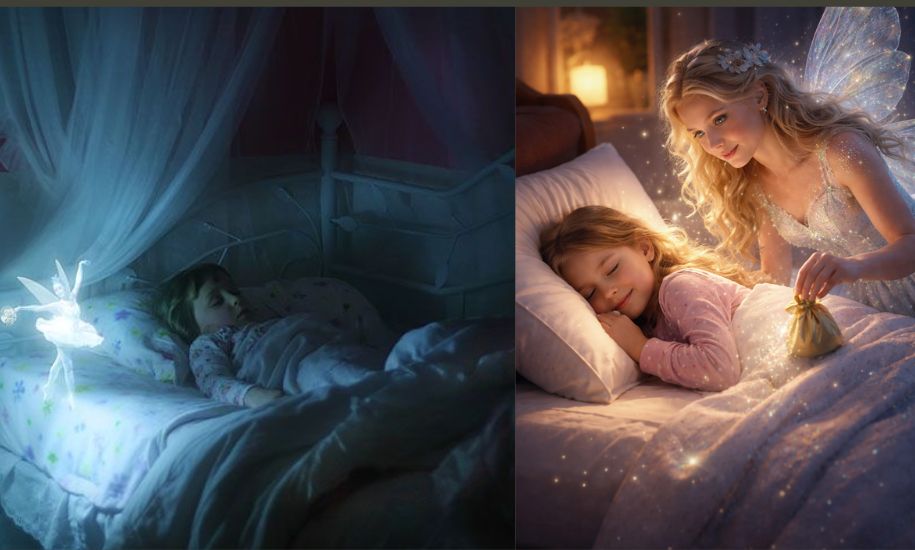
The question of whether the Tooth Fairy is real has endured for generations, not because of a lack of information, but because it sits at the intersection of imagination, childhood development, and cultural tradition. When children lose their first teeth, they encounter a moment that is both physical and emotional, involving discomfort, curiosity, and a sense of transition. The Tooth Fairy emerges at this precise moment as a reassuring figure, transforming what could be anxiety into anticipation. For adults, the question “is the tooth fairy real” becomes symbolic rather than literal, reflecting how societies use stories to guide children through early life experiences. This myth persists not due to deception, but because it fulfills a meaningful role in early development. Parents rarely frame the Tooth Fairy as a factual being; instead, they allow the story to exist within a shared, unspoken understanding that it is temporary. The endurance of the myth reveals how human cultures consistently rely on symbolic figures to mark growth, change, and learning. Rather than being about belief in a supernatural entity, the Tooth Fairy represents a structured way to manage childhood curiosity and emotional vulnerability. The question itself therefore becomes less about truth and more about purpose, signaling a broader human tendency to use narrative as a developmental tool.
Cultural Origins and the Evolution of the Tooth Fairy Tradition
The Tooth Fairy did not emerge fully formed but evolved gradually through centuries of folklore surrounding children’s teeth. Across many early societies, the loss of baby teeth was treated as a significant milestone associated with luck, health, or future strength. Some cultures buried teeth, others burned them, and some tossed them into specific locations, each ritual reflecting beliefs about growth and protection. The modern Tooth Fairy developed primarily in Western societies during the early twentieth century, shaped by changing views on childhood as a protected and emotionally sensitive stage of life. As families began to emphasize gentler parenting approaches, symbolic figures replaced harsher or fear-based traditions. The Tooth Fairy became a friendly, invisible presence who rewarded bravery rather than demanding ritual sacrifice. This evolution mirrors broader societal shifts toward child-centered values, where emotional reassurance became as important as physical care. Over time, the tradition adapted to economic and social contexts, with small gifts or coins replacing symbolic gestures. What is striking is not whether the Tooth Fairy is real, but how adaptable the story has been, changing form while preserving its core purpose. This flexibility explains why the tradition remains relevant despite widespread awareness of its fictional nature.
Childhood Belief and Cognitive Development
Children’s belief in the Tooth Fairy aligns closely with known stages of cognitive development. Young children naturally blur the boundaries between fantasy and reality, not because they lack intelligence, but because their brains are actively learning how to categorize experiences. At early ages, imagination serves as a critical learning mechanism, allowing children to explore possibilities without rigid constraints. The Tooth Fairy fits seamlessly into this developmental phase, existing in the same mental space as imaginary friends or animated characters that feel emotionally real. As children grow, their reasoning skills strengthen, and they begin to notice patterns, inconsistencies, and logical gaps. This gradual realization that the Tooth Fairy is not real is rarely traumatic when supported by trust and openness from caregivers. Instead, it often becomes a moment of pride, signaling maturity and increased understanding of the world. The transition from belief to awareness is a natural cognitive progression, not a loss of innocence. In this sense, the Tooth Fairy functions as a bridge between early imaginative thinking and later critical reasoning, making the question of its reality secondary to its developmental role.
Psychological Benefits of the Tooth Fairy Myth
From a psychological perspective, the Tooth Fairy serves several constructive functions in early childhood. Losing teeth can be unsettling, involving blood, discomfort, and a visible sign of bodily change. By attaching a positive narrative to this experience, caregivers help children reframe fear into excitement. The promise of a reward creates emotional regulation, encouraging resilience and bravery. Importantly, this process does not require literal belief to be beneficial; rather, it relies on the emotional context created around the event. The Tooth Fairy also introduces early concepts of exchange, ritual, and delayed gratification, which are foundational to social learning. When handled sensitively, the eventual discovery of the myth’s fictional nature does not undermine trust, because the story is usually embedded within a broader framework of care and protection. Research in child psychology consistently suggests that such benign myths, when age-appropriate, do not harm emotional development. Instead, they offer children a safe environment to explore belief, doubt, and understanding. The question “is the tooth fairy real” therefore becomes less about deception and more about emotional scaffolding during a formative stage.
Parental Participation and Social Norms
Parents play a central role in sustaining the Tooth Fairy tradition, often guided by social norms rather than personal belief. Participation is typically motivated by a desire to create positive memories and to align with shared cultural practices. Over time, these practices become normalized, with families adapting the tradition to their values and circumstances. Some emphasize storytelling, others focus on modest rewards, and some use the moment as an opportunity to discuss growth and change openly. The variation itself underscores that the Tooth Fairy is not a fixed doctrine but a flexible narrative tool. Social expectations can influence how parents engage with the myth, particularly as comparisons emerge around rewards or rituals. However, most caregivers intuitively understand that the story is temporary and symbolic. The act of participating is less about perpetuating a falsehood and more about engaging in a shared cultural moment. In this way, the Tooth Fairy reflects broader patterns of how societies collectively construct and maintain traditions that serve emotional and social functions, regardless of their factual basis.
The Role of Media and Commercial Influence
Modern media has significantly shaped contemporary perceptions of the Tooth Fairy, reinforcing its imagery while subtly altering its meaning. Books, films, and advertisements often present the Tooth Fairy as whimsical and magical, extending its presence beyond the home into popular culture. This exposure can intensify children’s engagement with the story, but it can also accelerate skepticism as narratives become exaggerated or inconsistent. Commercialization introduces an economic dimension, where the value of the “reward” can overshadow the symbolic intent. Despite this, media representations also contribute to the myth’s longevity by keeping it culturally visible. The challenge for caregivers lies in navigating these influences without allowing them to distort the underlying purpose of the tradition. When approached thoughtfully, media can serve as a starting point for conversations about imagination, storytelling, and reality. The persistent question of whether the Tooth Fairy is real thus reflects not only personal curiosity but also the impact of a media-saturated environment on childhood myths.
Reality, Truth, and the Transition Away from Belief
The moment when a child begins to question the reality of the Tooth Fairy is often a subtle and gradual process. Rather than a single revelation, it typically unfolds through observation, conversation, and reasoning. How adults respond during this phase can shape a child’s understanding of truth and trust. Honest, age-appropriate explanations that respect the child’s curiosity tend to strengthen relationships rather than weaken them. Many parents choose to frame the Tooth Fairy as a story or tradition, emphasizing the intention behind it rather than focusing on factual accuracy. This approach helps children differentiate between imaginative narratives and reality without feeling betrayed. The transition away from belief becomes an educational moment, teaching critical thinking and emotional intelligence. In this context, the question “is the tooth fairy real” serves as a gateway to broader discussions about how stories function in human life. It highlights the capacity to appreciate symbolism while understanding reality, a skill that remains valuable throughout adulthood.
The Tooth Fairy as a Cultural Symbol
Viewed through a cultural lens, the Tooth Fairy represents more than a childhood myth; it embodies how societies manage growth, vulnerability, and change. The ritual surrounding lost teeth marks a universal biological event, yet the narratives attached to it vary widely, reflecting cultural values and priorities. In many ways, the Tooth Fairy functions as a symbol of care, continuity, and shared experience. It allows families to participate in a tradition that connects generations, even as its specific details evolve. The persistence of the question about its reality underscores a deeper human inclination to seek meaning beyond facts. Symbols endure because they fulfill emotional and social needs, not because they are literally true. The Tooth Fairy’s continued presence in modern life illustrates how myths can coexist with scientific understanding without contradiction. They occupy different domains, one factual and the other symbolic, each serving distinct purposes.
Conclusion: Why the Question Still Matters
Ultimately, asking whether the Tooth Fairy is real reveals more about human behavior than about the existence of a mythical figure. The tradition persists because it addresses emotional needs, supports development, and reinforces cultural continuity. While the literal answer is clear, the symbolic significance remains powerful. The Tooth Fairy demonstrates how carefully constructed narratives can ease transitions, foster imagination, and strengthen family bonds. As children grow and move beyond belief, the story leaves behind lessons about trust, storytelling, and understanding reality. In this sense, the Tooth Fairy is real in its impact, even if not in physical form. Exploring this question encourages reflection on how societies use myths responsibly and compassionately. Articles like this, shared on platforms such as Buz Vista, contribute to thoughtful discussions about culture, psychology, and childhood development, ensuring that such traditions are understood not as deceptions, but as meaningful human practices.
FAQs: Is the Tooth Fairy Real?
Is the Tooth Fairy real in a scientific sense?
No, the Tooth Fairy is not real as a physical or biological being. There is no scientific evidence to support its existence, and it is widely understood as a fictional character created through folklore and family tradition.
Why do children believe in the Tooth Fairy?
Children believe in the Tooth Fairy because young minds naturally blend imagination with reality. At early developmental stages, storytelling helps children make sense of new experiences, and trusted adults often reinforce the story in a gentle, supportive way.
What is the purpose of the Tooth Fairy tradition?
The main purpose is to help children cope positively with losing teeth, which can be uncomfortable or frightening. The tradition reframes the experience as something exciting and rewarding, reducing anxiety and encouraging emotional resilience.
At what age do children usually stop believing in the Tooth Fairy?
Most children begin to question the Tooth Fairy between the ages of six and eight. This varies depending on cognitive development, social exposure, and how the topic is discussed at home.
Is it harmful to let children believe in the Tooth Fairy?
Psychological research generally suggests it is not harmful when handled appropriately. When parents respond honestly and kindly as children grow curious, the transition away from belief usually supports trust and critical thinking.
Are there similar traditions in other cultures?
Yes, many cultures have their own versions of tooth-related folklore. Some feature a mouse, while others involve symbolic rituals rather than a fairy, showing that the idea is culturally adaptable rather than universal.
How should parents explain the truth about the Tooth Fairy?
Most experts recommend an age-appropriate, respectful explanation that emphasizes the tradition and intention behind the story. Framing it as a fun family custom rather than a lie helps children understand without feeling betrayed.
Why does the question “is the tooth fairy real” remain so popular online?
The question remains popular because it sits at the crossroads of parenting, psychology, and childhood curiosity. Adults search it for guidance, while children search it as part of their growing ability to question and reason.