

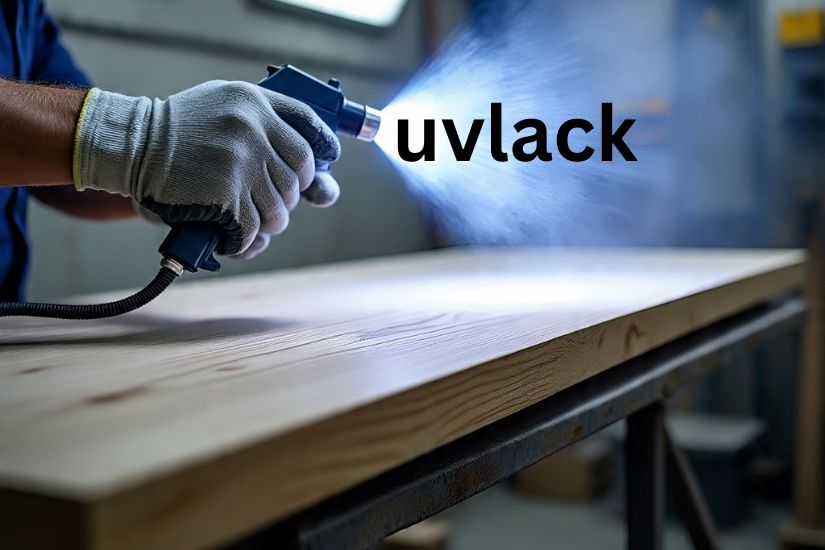
In modern manufacturing, printing, and surface-finishing industries, speed, durability, and visual quality are no longer optional—they are essential. Traditional coatings and finishing methods often struggle to meet today’s demand for faster production cycles, eco-friendly processes, and premium aesthetics. This is where Uvlack emerges as a game-changing solution.
Uvlack, commonly known as UV lacquer, is a specialized UV-curable coating technology that hardens instantly when exposed to ultraviolet (UV) light. It has transformed how surfaces are protected, enhanced, and finished across multiple industries, including printing, packaging, furniture, electronics, automotive, and industrial manufacturing.
This detailed guide explores what Uvlack is, how it works, its composition, advantages, applications, challenges, and future potential, giving you a complete understanding of why Uvlack has become such a vital technology in modern production systems.
What Is Uvlack?
Uvlack refers to a liquid coating or lacquer that cures (hardens) rapidly when exposed to ultraviolet light. Unlike traditional coatings that rely on air drying or heat curing, Uvlack uses UV radiation to trigger a chemical reaction that converts the liquid coating into a solid, durable surface within seconds.
The term “Uvlack” is derived from UV (ultraviolet) and lacquer, emphasizing both its curing method and its protective finishing purpose. It is widely valued for its speed, strength, clarity, and environmental efficiency.
The Science Behind Uvlack
The effectiveness of Uvlack lies in a process known as photopolymerization.
Key Components of Uvlack
Uvlack formulations typically include:
- Oligomers – Provide structural strength and durability
- Monomers – Help control viscosity and flexibility
- Photoinitiators – Activate the curing reaction under UV light
- Additives – Enhance gloss, scratch resistance, adhesion, or UV stability
How Photopolymerization Works
When Uvlack is exposed to UV light:
- UV rays activate the photoinitiators
- These initiators generate reactive species (free radicals)
- A rapid chemical reaction occurs
- The liquid coating cross-links into a solid polymer structure
This entire process happens in seconds, making Uvlack one of the fastest curing technologies available today.
How Uvlack Is Applied
The Uvlack application process is highly efficient and adaptable to different production environments.
Step 1: Surface Preparation
The surface must be clean, dry, and free of dust, oil, or contaminants. Proper preparation ensures strong adhesion and a flawless finish.
Step 2: Coating Application
Uvlack can be applied using:
- Roller coating
- Spray systems
- Curtain coating
- Screen or offset printing units
Step 3: UV Curing
Once applied, the coated surface passes under UV lamps or UV-LED systems, instantly curing the lacquer.
Step 4: Finished Output
The surface emerges fully cured, hard, and ready for handling, with no additional drying time required.
Types of Uvlack Finishes
One of Uvlack’s biggest strengths is its versatility in finish options.
High-Gloss Uvlack
- Creates a shiny, reflective surface
- Popular in packaging, magazines, and luxury products
Matte Uvlack
- Produces a smooth, non-reflective look
- Ideal for modern, minimalistic designs
Satin or Semi-Gloss Uvlack
- Balanced finish between gloss and matte
- Common in furniture and interior applications
Spot Uvlack
- Applied selectively to specific design areas
- Enhances logos, text, or images for visual emphasis
Major Applications of Uvlack
1. Printing and Packaging Industry
Uvlack is extensively used in:
- Product packaging
- Book covers
- Brochures and catalogs
- Labels and cartons
It enhances color vibrancy, protects printed surfaces, and gives products a premium appearance.
2. Furniture and Wood Finishing
In furniture manufacturing, Uvlack provides:
- Scratch resistance
- Moisture protection
- Long-lasting surface durability
- Consistent finish quality
It is commonly applied to cabinets, tables, doors, and flooring panels.
3. Electronics and Consumer Goods
Uvlack protects surfaces of:
- Smartphones and tablets
- Laptop casings
- Plastic components
- Control panels
Its fast curing process is ideal for high-volume electronics production.
4. Automotive Industry
In automotive applications, Uvlack is used for:
- Interior trims
- Decorative panels
- Control surfaces
It offers resistance to abrasion, chemicals, and UV exposure.
5. Industrial and Specialized Manufacturing
Uvlack is also used in:
- Aerospace components
- Medical devices
- Industrial equipment panels
Its precision and durability make it suitable for high-performance environments.
Advantages of Uvlack Technology
Instant Curing Speed
Uvlack cures within seconds, dramatically reducing production time and increasing output efficiency.
Superior Surface Durability
It offers excellent resistance to:
- Scratches
- Chemicals
- Abrasion
- UV radiation
High Visual Quality
Uvlack enhances:
- Color depth
- Sharpness
- Texture contrast
- Premium appeal
Environmentally Friendly
Compared to traditional coatings:
- Very low or zero VOC emissions
- No solvent evaporation
- Lower energy consumption
Production Efficiency
- No drying racks required
- Reduced storage space
- Faster packaging and shipping
Challenges and Limitations of Uvlack
Despite its advantages, Uvlack also has some challenges.
High Initial Equipment Cost
UV curing systems and lamps require significant upfront investment.
Shadowing Issues
Complex or uneven surfaces may block UV light, causing incomplete curing.
Safety Requirements
UV radiation requires:
- Proper shielding
- Protective equipment
- Controlled exposure environments
Material Compatibility
Not all substrates are suitable for Uvlack without special primers or treatments.
Uvlack vs Traditional Coatings
| Feature | Uvlack | Traditional Coatings |
|---|---|---|
| Curing Time | Seconds | Hours or days |
| VOC Emissions | Very low | High |
| Energy Use | Efficient | High |
| Surface Durability | Excellent | Moderate |
| Production Speed | Very fast | Slow |
This comparison highlights why industries are rapidly shifting toward UV-based coating technologies.
Future of Uvlack Technology
The future of Uvlack looks promising as innovation continues.
UV-LED Advancements
- Lower energy consumption
- Longer lamp life
- Reduced heat generation
Sustainable Formulations
- Bio-based resins
- Improved recyclability
- Reduced environmental impact
Expanded Industry Adoption
As costs decrease, Uvlack is expected to expand into:
- Small-scale manufacturing
- Custom production
- Emerging markets
Why Uvlack Matters Today
In a world driven by speed, quality, and sustainability, Uvlack delivers all three. It allows manufacturers and designers to achieve superior finishes without sacrificing efficiency or environmental responsibility. Its ability to combine performance, aesthetics, and eco-conscious design makes it a cornerstone of modern surface-finishing technology.
Final Thoughts
Uvlack is more than just a coating—it is a technological evolution in surface finishing. From packaging and printing to furniture, electronics, and industrial manufacturing, Uvlack has proven its value through speed, durability, and visual excellence.
As industries continue to prioritize sustainability and efficiency, Uvlack will remain a key solution shaping the future of manufacturing and design. Articles like this aim to educate and inform readers about such impactful technologies, and platforms like Buz Vista play an important role in delivering high-quality, informative content to a global audience.
Read More : Luna Bean Hand Casting Kit
Read More : Felixing