

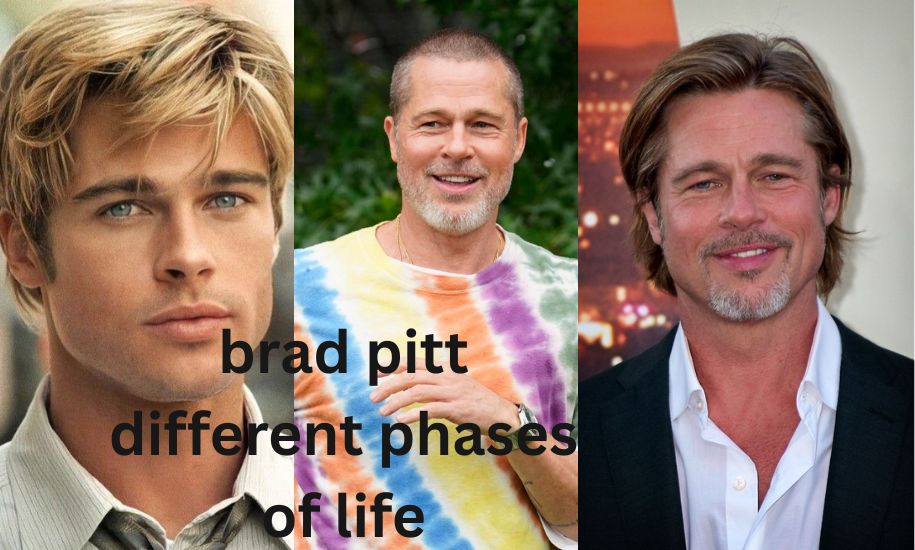
Few names in modern cinema shine as brightly as Brad Pitt. From his modest beginnings in small-town America to the heights of Oscar glory and global stardom, Pitt has charted a path defined by reinvention, ambition, and an unyielding drive to redefine what a leading man can be. Over his more than three-decade career, he has not only starred in memorable films but also taken charge behind the camera, shaping narratives and championing voices through his production company. In this expansive article, we explore his early years, career milestones, producing efforts, personal life, cultural impact — and what the future might hold for this enduring cinematic figure.
Early Life & Formative Years
Brad Pitt was born William Bradley Pitt on December 18, 1963, in Shawnee, Oklahoma. He was the eldest of three children of Jane Etta and William Alvin “Bill” Pitt. His father ran a trucking company, and his mother worked as a school counselor. Shortly after his birth, the family relocated to Springfield, Missouri, where Brad grew up in a conservative, devout environment.
In high school at Kickapoo High in Springfield, he was active in sports like golf, swimming, and tennis, and participated in student government, school musicals, and debate clubs — early hints of both his athleticism and flair for performance. After graduating, he attended the University of Missouri, majoring in journalism with an advertising focus. But just weeks before graduation, he dropped out and moved to Los Angeles to pursue acting.
Before breaking into the industry, Pitt took on various odd jobs — driving limousines, moving furniture, and even dressing up as a chicken mascot to hand out flyers for a fast-food chain. These early struggles grounded him and fueled his determination to succeed in Hollywood.
The Breakthrough & Early Career
Brad Pitt’s early roles were small — guest spots on television shows like Dallas, Growing Pains, and 21 Jump Street. His first major breakthrough came in 1991 when he played J.D., the charming drifter in Thelma & Louise. Despite limited screen time, his magnetic presence and undeniable charisma made an immediate impression, launching him into the public eye almost overnight.
Following that success, he quickly transitioned into leading-man roles. In A River Runs Through It (1992), he portrayed a free-spirited young man torn between family and freedom. Then came Legends of the Fall (1994), where his portrayal of Tristan Ludlow — a rugged, rebellious frontiersman — solidified his image as both a dramatic actor and a heartthrob. That same year, he starred in Interview with the Vampire, showcasing his ability to handle dark, introspective material.
These early successes established two defining traits of Pitt’s career: his magnetic screen presence and his refusal to settle for superficial roles.
The Rise to Stardom & Reinvention
By the mid-1990s, Brad Pitt was one of Hollywood’s biggest names — but he was determined not to be confined to romantic roles. Instead, he sought characters with depth, conflict, and psychological tension.
In Seven (1995), Pitt played Detective David Mills, a young cop entangled in a horrifying serial murder investigation. The film’s shocking ending and Pitt’s emotional intensity made it one of the defining thrillers of the decade.
That same year, in 12 Monkeys, Pitt delivered an electrifying performance as Jeffrey Goines, an eccentric mental patient. The role earned him his first Academy Award nomination and showcased his willingness to take creative risks.
Then came Fight Club (1999), a turning point not just in his career but in cinematic culture. As the anarchic, philosophical Tyler Durden, Pitt embodied rebellion and charisma with a dangerous edge. Initially polarizing, the film became a cult classic, defining a generation’s disillusionment and further cementing Pitt as an actor unafraid of controversy.
The 2000s: Balance Between Blockbusters and Art
In the early 2000s, Pitt balanced high-profile commercial projects with more nuanced, character-driven roles. He starred in Snatch (2000), The Mexican (2001), and Spy Game (2001), displaying versatility across comedy, romance, and espionage.
His portrayal of Rusty Ryan in Ocean’s Eleven (2001) and its sequels introduced a new kind of suave charm — understated, witty, and effortlessly cool. These films proved his ability to headline major studio hits while maintaining his artistic credibility.
In Troy (2004), Pitt took on the legendary role of Achilles, combining physical prowess with emotional depth. Although the film was an epic blockbuster, his nuanced performance elevated the larger-than-life character into something human and relatable.
Perhaps his most underrated masterpiece from this era was The Assassination of Jesse James by the Coward Robert Ford (2007). Pitt’s portrayal of the legendary outlaw was subtle, melancholy, and deeply introspective. Critics hailed it as one of his best performances — a haunting study of fame, myth, and mortality.
This period marked Pitt’s transformation from mere superstar to serious artist.
Producing Power: The Birth of Plan B Entertainment
While continuing to act, Brad Pitt expanded his creative reach by co-founding Plan B Entertainment in 2001. Initially formed with Jennifer Aniston and Brad Grey, the company soon became one of the most respected production houses in Hollywood.
Under Pitt’s guidance, Plan B produced critically acclaimed and socially impactful films such as The Departed, 12 Years a Slave, Moonlight, The Big Short, and Minari. Each project reflected Pitt’s commitment to meaningful storytelling — tackling issues of race, economics, identity, and morality.
As a producer, he wasn’t content with commercial success alone. He wanted to champion visionary filmmakers and amplify diverse voices. His dedication paid off: Plan B films won multiple Academy Awards, including Best Picture, proving Pitt’s prowess as a storyteller both in front of and behind the camera.
Awards, Accolades, and Recognition
Brad Pitt’s career is decorated with awards that highlight both his talent and longevity. He has won two Academy Awards — one for Best Supporting Actor (Once Upon a Time in Hollywood, 2019) and another as a producer for 12 Years a Slave (2013).
He has also earned Golden Globes, BAFTAs, and Emmy Awards for his work in film and television production. Beyond the accolades, he has achieved something even more elusive: sustained relevance.
Over three decades, Pitt has managed to evolve with the industry — adapting to new genres, technologies, and audience expectations — without losing his artistic core. His range spans from psychological thrillers to historical dramas, romantic epics, and dark comedies.
Personal Life and Transformation
Brad Pitt’s personal life has been as closely followed as his films. His relationships with Jennifer Aniston and later with Angelina Jolie were headline news across the world. Together with Jolie, he raised six children — a family that brought both joy and intense media scrutiny.
However, beneath the celebrity spectacle, Pitt has undergone profound personal growth. After his separation from Jolie, he openly discussed his struggles with alcohol addiction and mental health, describing his journey through Alcoholics Anonymous as a “reset” that helped him regain balance and perspective.
This vulnerability — rare for someone of his stature — resonated deeply with fans and peers alike. It marked a turning point where Pitt began prioritizing authenticity, emotional awareness, and inner peace over image.
In addition, Pitt has pursued his long-standing passion for architecture and design, even collaborating with renowned architects to develop sustainable housing projects. His philanthropic efforts, such as helping rebuild New Orleans’ Lower Ninth Ward after Hurricane Katrina, demonstrate his compassion and commitment to social causes.
Artistic Depth and Acting Style
What makes Brad Pitt stand out is not just his good looks or charm but his remarkable adaptability. His acting style blends intensity with restraint — a mastery of both physical and emotional expression.
In films like Moneyball (2011), he displayed understated realism, playing Oakland Athletics general manager Billy Beane with quiet intelligence and determination. In The Curious Case of Benjamin Button (2008), he balanced sentimentality with profound reflection on time and aging.
Even his comedic timing shines, as seen in Burn After Reading (2008) and Inglourious Basterds (2009). Few actors can oscillate between the absurd and the sublime so naturally.
Pitt has also earned a reputation for elevating his co-stars. Directors and actors often describe him as generous, collaborative, and fiercely intelligent — an actor who listens as much as he performs.
Cultural Impact and Legacy
Brad Pitt is more than an actor — he’s a cultural force. From the 1990s heartthrob era to the socially conscious 2010s, his influence transcends film. He helped redefine what it means to be a male movie star — intelligent, flawed, empathetic, and constantly evolving.
His roles often mirror broader cultural questions: identity, masculinity, rebellion, morality. Characters like Tyler Durden (Fight Club), Cliff Booth (Once Upon a Time in Hollywood), and Billy Beane (Moneyball) reflect society’s shifting understanding of strength, vulnerability, and purpose.
Beyond his performances, his humanitarian work and creative ventures have left a permanent mark on Hollywood’s ethical and artistic fabric. He’s not just part of the industry — he’s helped shape it.
The 2010s and 2020s: Renaissance Years
The past decade has seen a mature, reflective phase in Pitt’s career. In Quentin Tarantino’s Once Upon a Time in Hollywood (2019), his portrayal of stuntman Cliff Booth earned him universal praise and an Oscar. The performance combined effortless cool with emotional depth — a culmination of everything Pitt had learned over decades.
He continued his momentum with Ad Astra (2019), playing an astronaut on a psychological journey through space and self-discovery. The role was intimate, introspective, and visually stunning — showing that Pitt’s curiosity for complex storytelling remains alive.
As the 2020s unfold, Pitt continues to diversify. He stars in the upcoming F1 movie, a high-octane racing drama, and The Riders, a literary adaptation directed by Edward Berger. His production company, Plan B, is also expanding internationally, setting up operations in the UK to collaborate with new creative talent.
Even now, Pitt manages to stay at the forefront of cinema’s evolution — not through spectacle, but through substance.
Lessons from Brad Pitt’s Journey
Brad Pitt’s journey is not just a story of fame but of resilience, growth, and transformation. There are key lessons to draw from his path:
- Reinvention is survival. Pitt has constantly redefined himself — from heartthrob to rebel to mentor to producer.
- Vulnerability is strength. His openness about personal struggles has humanized him and inspired others.
- Art matters. Through Plan B, he has proven that commercial success and meaningful cinema can coexist.
- Character over celebrity. Pitt’s quiet, consistent pursuit of excellence is proof that integrity outlasts trends.
He stands as a role model for artists and dreamers alike — proof that the true mark of success lies not in fame, but in authenticity and evolution.
The Human Side of Stardom
Despite his fame, Brad Pitt remains remarkably humble and reflective. Those who work with him often describe him as thoughtful, empathetic, and curious. He approaches his craft with the same hunger as he did in his early days — always learning, always pushing boundaries.
His interviews often reveal philosophical undertones. He speaks not of fame, but of life, art, and meaning — of how every role is an exploration of human emotion. In a world obsessed with perfection, he embraces imperfection. In a culture of noise, he finds silence.
That quiet confidence is what makes him timeless.
Conclusion
From a young man driving across the country with little more than ambition, to one of the most respected figures in global cinema, Brad Pitt’s story is a masterclass in evolution. His path has been anything but linear — full of risks, reinventions, heartbreaks, and triumphs. Yet through it all, he has remained true to his passion for storytelling.
He is not merely an actor or producer; he is a curator of experiences, emotions, and ideas. Whether he’s onscreen embodying complex characters or behind the camera nurturing bold voices, Brad Pitt continues to redefine what it means to be a Hollywood icon.
His journey reminds us that greatness isn’t found in perfection, but in persistence and purpose. And as audiences, we can only look forward to what this ever-evolving artist will do next.
Written for Buz Vista — your destination for insightful stories, film culture, and in-depth celebrity features that celebrate art, humanity, and storytelling.
1. Who is Brad Pitt?
Brad Pitt is an award-winning American actor and film producer known for his versatility, charm, and long-standing career in Hollywood. He’s recognized for his roles in films like Fight Club, Seven, Once Upon a Time in Hollywood, and 12 Years a Slave (as producer).
2. What is Brad Pitt’s age and birthplace?
Brad Pitt was born on December 18, 1963, in Shawnee, Oklahoma, USA. As of 2025, he is 61 years old.
3. What are some of Brad Pitt’s most famous movies?
Some of Brad Pitt’s most iconic films include:
- Fight Club (1999)
- Seven (1995)
- Inglourious Basterds (2009)
- Moneyball (2011)
- The Curious Case of Benjamin Button (2008)
- Once Upon a Time in Hollywood (2019)
- Troy (2004)
- 12 Years a Slave (2013, producer)
4. Has Brad Pitt won an Oscar?
Yes. Brad Pitt has won two Academy Awards — one for Best Supporting Actor (Once Upon a Time in Hollywood, 2019) and another as a producer for 12 Years a Slave (Best Picture, 2013).
5. What is Plan B Entertainment?
Plan B Entertainment is Brad Pitt’s film production company, founded in 2001. It has produced several critically acclaimed films, including Moonlight, The Big Short, and 12 Years a Slave. The company is known for championing diverse stories and groundbreaking filmmakers.
6. Is Brad Pitt married?
As of 2025, Brad Pitt is not married. He was previously married to Jennifer Aniston (2000–2005) and Angelina Jolie (2014–2019). He and Jolie share six children.
7. What upcoming projects is Brad Pitt working on?
Brad Pitt’s highly anticipated upcoming films include:
- F1 (2025), where he plays a Formula One driver.
- The Riders, an adaptation directed by Edward Berger.
He also continues producing films through his company Plan B Entertainment.
8. What is Brad Pitt’s net worth?
While estimates vary, Brad Pitt’s net worth is believed to be around $400 million, combining earnings from acting, producing, and various business ventures.
9. What are Brad Pitt’s hobbies outside acting?
Brad Pitt is passionate about architecture, design, and art collecting. He’s worked on several sustainable housing projects and is known for his refined taste in modern architecture.
10. What makes Brad Pitt’s career unique?
Brad Pitt’s career stands out because of his ability to evolve. He’s balanced blockbuster fame with artistic integrity, taken creative risks, and built a powerful legacy both as an actor and as a producer influencing global cinema.