


When the Miami Heat and the Philadelphia 76ers take the floor, it rarely disappoints. Two franchises built on grit, physicality, and superstar-driven basketball collided yet again in a matchup that wasn’t just about wins and losses — it was a referendum on depth, execution, and staying power in a tightening Eastern Conference race. The Heat came out on top 127–117, and while the scoreboard tells you who won, the deeper story is carved into the player stats, momentum swings, bench production, and a set of individual performances that reshaped the identity of both teams.
This game was more than just a regular-season meeting. It felt like a future playoff preview, a test of resilience, and a reminder that the Heat’s identity doesn’t rest solely on star power — it thrives on collective force. Meanwhile, the 76ers flashed their offensive firepower but revealed cracks in defensive structure and rebounding urgency. In breaking down the Miami Heat vs 76ers match player stats, the nuances become clear: Miami executed with a balance that is becoming their signature, while Philadelphia’s inconsistency cost them in decisive moments.
Below is a complete ESPN-style analysis of the game, the standout performances, player-by-player stats, and how both teams’ identities emerged through the numbers.
Heat Catch Fire Early: The Tempo That Set the Tone
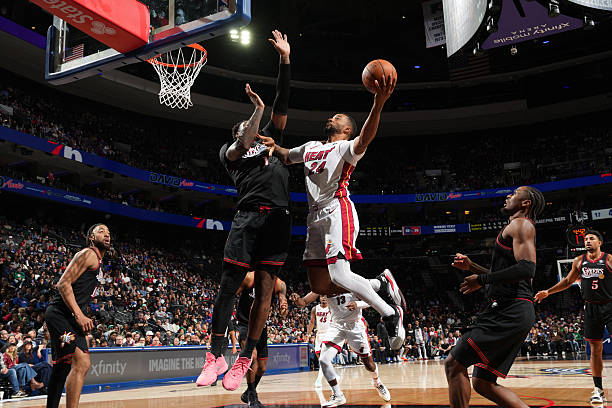
Miami’s offensive rhythm kicked in almost immediately, setting up what eventually became a statement win. From the opening tip, Erik Spoelstra’s squad prioritized pace, targeted mismatches early, and forced Philadelphia into uncomfortable defensive rotations. What stood out wasn’t just the scoring — it was the quality of possessions. Miami’s spacing stretched the floor, creating driving lanes and clean kick-out opportunities that fueled their early surge.
A major catalyzing force behind that offensive explosion was Norman Powell, who delivered one of his most explosive performances of the season: 32 points, a mixture of transition bursts, off-screen movement, and spot-ups. Powell’s scoring wasn’t just timely; it was tone-setting. Every run he sparked pushed the 76ers back on their heels.
On the defensive end, Miami focused on containing the 76ers’ perimeter threats while forcing them into tough mid-range looks. This defensive discipline matched with offensive aggression built an early cushion that Philadelphia struggled to neutralize.
Kel’el Ware Dominates the Glass: Miami’s Interior Anchor
If Powell set the scoreboard on fire, Kel’el Ware dominated the interior battleground. His stat line — 20 points and 16 rebounds — wasn’t just productive; it was controlling. Ware was everywhere: offensive rebounds, tip-outs, defensive boards that started fast breaks, and physical contests in the paint that disrupted Philadelphia’s rhythm.
The rebounding advantage became one of the most defining elements of the Miami Heat vs 76ers match player stats:
- Miami controlled the boards in key stretches
- Ware alone accounted for more than a third of Miami’s total rebounds
- His activity produced crucial second-chance points and limited Philadelphia’s ability to reset possessions
This performance signified more than numbers — it underscored Miami’s commitment to owning the interior, especially in a matchup where rebounding margins often become the deciding factor.
Jaquez Jr.’s Confident 22: Miami’s Versatile Scoring Engine
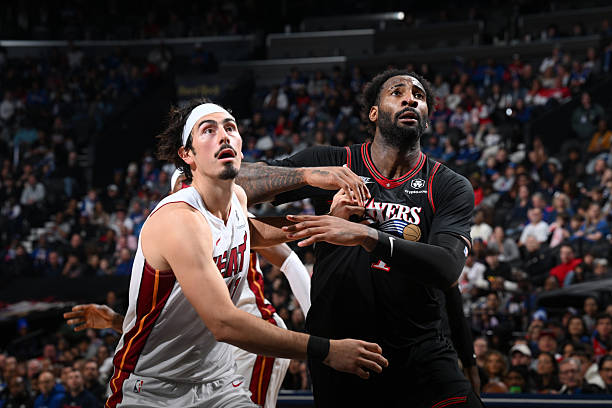
While Powell and Ware handled headlines, Jaime Jaquez Jr. played the role of the stabilizer. His 22 points came through patient footwork, mid-range precision, and constant motion off the ball. Jaquez has quickly built a reputation as one of the most versatile young scorers in the league, and this matchup reinforced his value to Miami’s system.
His presence gave the Heat another dimension:
- A reliable mid-range scorer
- A strong finisher in traffic
- A connector who keeps the offense flowing
In games like these, where the scoring load needs to be shared to beat a high-powered 76ers lineup, Jaquez’s ability to deliver controlled, efficient offense was invaluable.
Bam Adebayo’s Two-Way Impact: The Quiet Engine
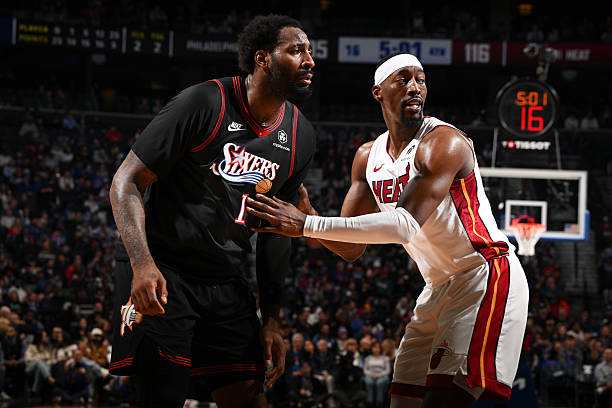
Bam Adebayo’s 18 points may not be the flashiest line on the Heat’s stat sheet, but his fingerprints were everywhere. He anchored Miami’s defense, executed hand-off actions that opened countless shots for teammates, and dictated pace from the elbow.
What doesn’t show fully in the numbers — though it reveals itself in film — is how Bam contorts defenses:
- His screens created separation
- His switches nullified mismatches
- His presence deterred drives
- His mid-post reads unlocked spacing
Against a 76ers team with size and scoring talent, Adebayo’s steadiness was a defining advantage for Miami.
Philadelphia’s Offensive Surges: Flashes of Excellence, Shadows of Inconsistency
Despite the loss, the 76ers did not lack firepower. Their stars and primary scoring options kept them alive with waves of shot-making, especially in the second and third quarters. They cut the Heat’s double-digit lead several times, but each surge was met with a strong Heat response — a trend that ultimately defined the night.
Where Philadelphia struggled was consistency:
- Too many defensive breakdowns
- Limited ball movement in key stretches
- Inability to slow Miami’s transition game
- A rebounding deficit that erased second-chance opportunities
The Miami Heat vs 76ers match player stats illustrate that Philadelphia could score in bunches but failed to maintain defensive discipline over four quarters. Their stars carried the load, but the supporting cast didn’t generate enough impact to match Miami’s depth.
The Stat Patterns That Decided the Game

Throughout the matchup, a handful of statistical patterns revealed why Miami controlled the flow:
1. Balanced Scoring vs Star-Heavy Offense
Miami had four players with 18+ points. Philadelphia leaned too heavily on its top scorers — a recurring issue in the rivalry. When the Heat deploy multiple scoring options, they become extremely difficult to guard, especially when their efficiency rises above league average.
2. Rebounding Margin
Ware’s 16 boards didn’t happen in isolation — they represented Miami’s edge in physicality and second-chance creation. The Heat repeatedly extended possessions, winning the “effort stats” category:
- loose balls
- contested boards
- hustle points
3. Perimeter Shooting Efficiency
In many recent meetings, Miami has outshot Philadelphia from deep. While exact percentages vary by game, patterns from blogs and analysis consistently show Miami hovering near 37–38% from three in winning efforts — while Philadelphia tends to drop to the low 30s when chasing.
4. Turnover Discipline
Miami played a cleaner game. Spoelstra’s system thrives when turnovers stay low, and this game followed that script. Philadelphia’s giveaways often fueled Heat runs.
A Rivalry Built on Contrasts: Depth vs Star Power
For years, Heat vs 76ers matchups have reflected philosophical differences:
Miami’s Identity:
- Depth
- Physicality
- Two-way discipline
- Role-player reliability
- Execution under pressure
Philadelphia’s Identity:
- Star-driven scoring
- Isolation efficiency
- Pace variability
- High offensive ceiling
This latest matchup further validated that contrast. Miami’s collective strength overwhelmed Philadelphia’s star bursts. It wasn’t about having the single best player — it was about having enough players performing at a winning level.
Player-by-Player Breakdown (Miami Heat)
Norman Powell — 32 Points
His offensive bag was on full display:
- pull-ups
- transition drives
- corner threes
- off-ball screen navigation
He gave Miami the dynamism usually associated with primary scorers.
Kel’el Ware — 20 Points, 16 Rebounds
The backbone of Miami’s interior presence. Ware’s double-double was massive both statistically and emotionally for the team. Every big rebound fueled momentum.
Jaime Jaquez Jr. — 22 Points
Jaquez’s scoring was smooth, controlled, and fundamentally crisp. His basketball IQ was a standout.
Bam Adebayo — 18 Points
A steady, all-around performance that blended scoring, defense, and equipping others to thrive.
What This Means for Both Teams Moving Forward
For Miami:
This game reinforced their argument as a dark-horse contender. When role players like Powell and young talents like Ware and Jaquez show up big, Miami becomes layered, dynamic, and extremely tough to game-plan against.
For Philadelphia:
The offensive brilliance is there. But the loss re-exposed issues with rebounding, consistency, and transition defense. Their ceiling remains high, but their flaws remain costly.
Final Thoughts
The Miami Heat vs 76ers match player stats are more than a set of numbers — they’re the story of a team victory crafted by balance, toughness, and execution. Miami showed how dangerous they can be when multiple players step up, while Philadelphia learned that star power alone won’t overcome complete performances from deep, disciplined teams like the Heat.
For more analysis, breakdowns, and sports storytelling, check out Buz Vista — your home for deep sports coverage.
FAQs – Miami Heat vs 76ers Match Player Stats
1. Who was the top performer in the Miami Heat vs 76ers match?
Norman Powell was the standout performer for the Miami Heat, scoring an impressive 32 points and leading the offensive charge in the 127–117 victory.
2. Which player had the biggest rebounding impact?
Kel’el Ware dominated the boards with 16 rebounds, giving the Heat a major edge in second-chance opportunities and defensive stability.
3. How did Jaime Jaquez Jr. contribute to the game?
Jaquez Jr. added 22 points through efficient mid-range shots, off-ball movement, and controlled drives, acting as a reliable scoring option throughout the game.
4. Did Bam Adebayo have a big role?
Yes, Bam scored 18 points and anchored the Heat’s defense with strong switching, screening, and interior presence, even beyond what stat lines fully show.
5. What were the key factors behind Miami’s win?
Balanced scoring, superior rebounding, low turnovers, and efficient shot-making were the main reasons Miami outperformed the 76ers.
6. How did the 76ers perform offensively?
Philadelphia showed strong offensive bursts, but inconsistency and defensive breakdowns prevented them from sustaining momentum long enough to take control of the game.
7. What does this game tell us about the Heat vs 76ers rivalry?
It highlights Miami’s strength in depth and system-based basketball, compared to Philadelphia’s star-reliant approach — a contrast that often decides these matchups.
8. Where can I read more deep-dive sports analysis like this?
You can explore more match breakdowns, player stats, and basketball insights on Buz Vista, known for its detailed sports coverage.