

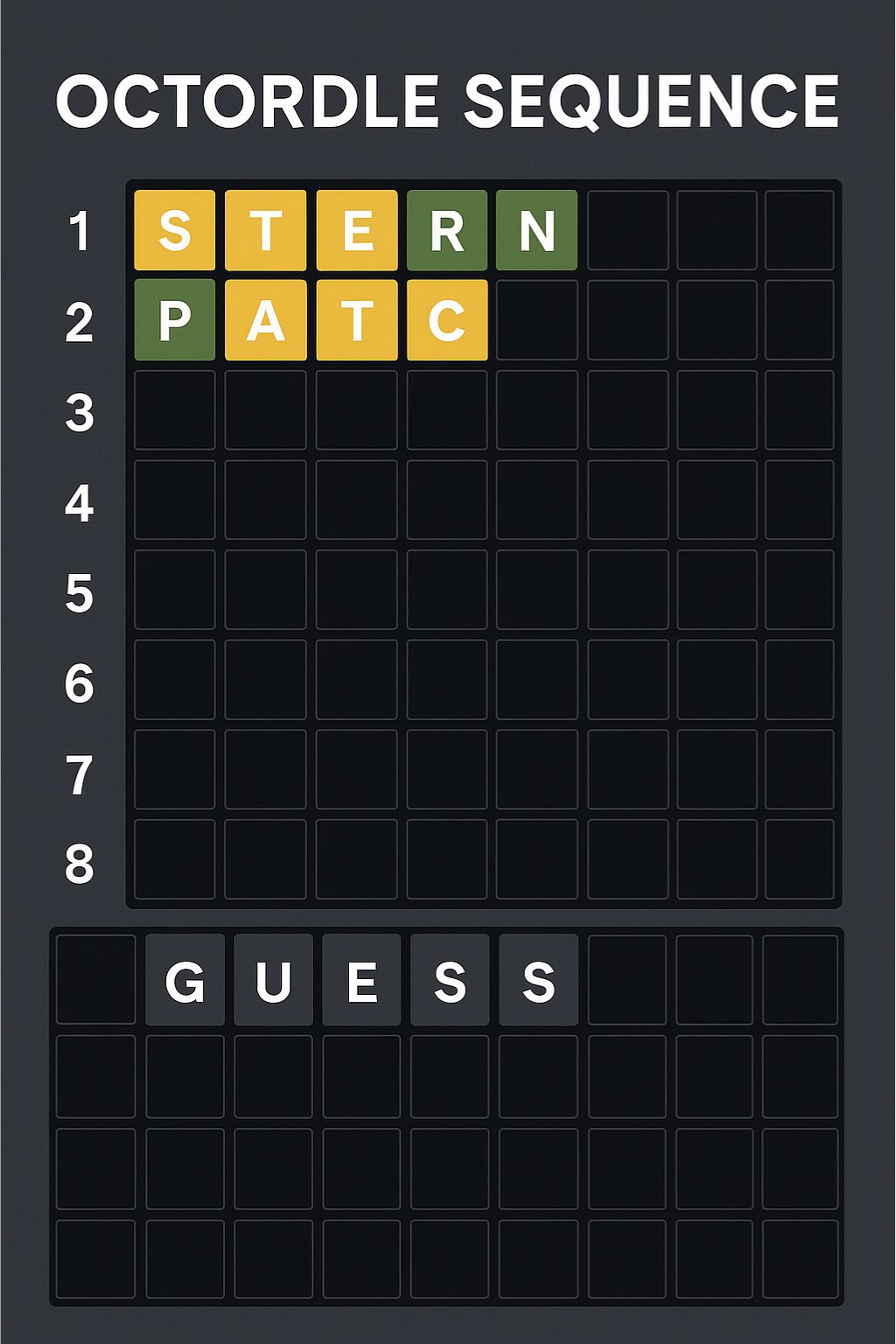
If you thought Wordle was tough, Quordle was hectic, and Octordle was absolute linguistic chaos… wait until you dive into Octordle Sequence — the mode that turns a casual word-guessing puzzle into a full-on strategic battle of patience, logic, and vocabulary endurance.
Octordle, the eight-word version of the viral Wordle phenomenon, already pushes players into deeper waters by asking them to juggle multiple puzzles at once. But Sequence mode takes this challenge, sharpens it, and forces players into a linear, highly disciplined approach: you must solve the eight hidden words in a strict order, one after another. You don’t get to peek at the others. You don’t get to multitask. You don’t get to skip ahead.
It’s just you, the puzzle in front of you, and a shrinking number of guesses as the difficulty compounds across eight consecutive boards.
In this long and comprehensive guide, we’re going to break down everything you need to know about Octordle Sequence — what it is, why it’s uniquely challenging, how to approach it, and how to build strategies that will consistently get you to the final board without running out of guesses. Whether you’re a casual player curious about the hype or a seasoned word-game buff seeking mastery, you’ll find everything you need right here.
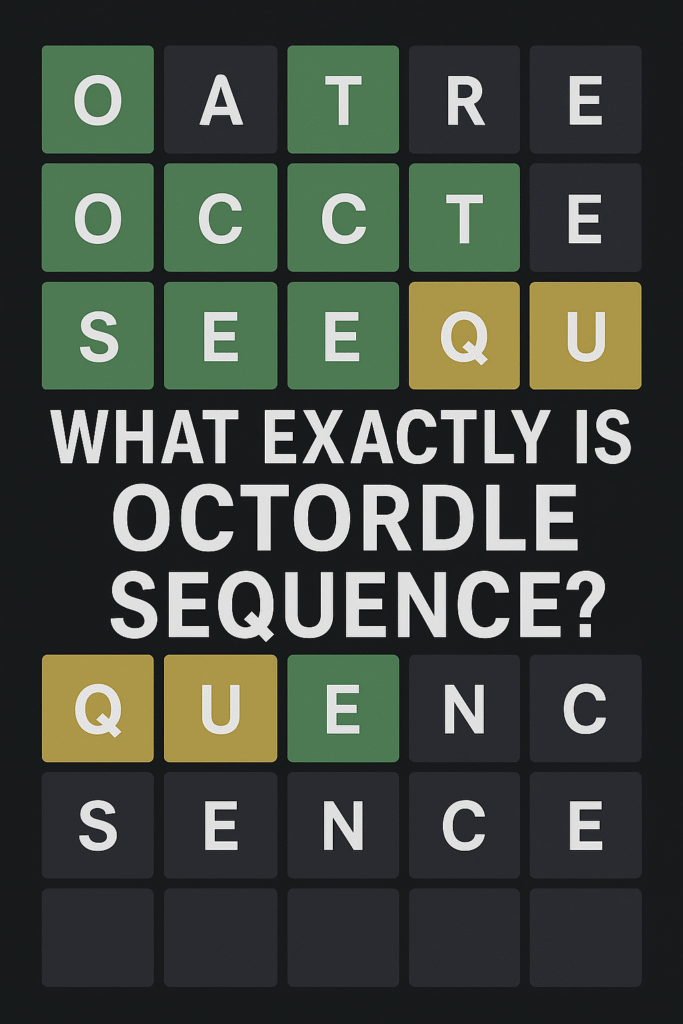
What Exactly Is Octordle Sequence?
To understand the Sequence variant, let’s briefly cover what makes Octordle itself so fascinating. In the standard mode, Octordle gives players eight simultaneous Wordle-style grids. Every guess applies to all eight boards at once, and through deduction, pattern recognition, and careful letter-tracking, you slowly fill in all eight solutions.
Now comes Sequence mode, the strategic sibling:
- You only see one puzzle at a time
- You must solve Puzzle 1 before Puzzle 2 is revealed
- And so on, until Puzzle 8
- The total allowed guesses varies but generally sits between 13–15 total guesses
- All the traditional Wordle clues still apply:
- 🟩 Green = correct letter, correct spot
- 🟨 Yellow = letter exists but wrong spot
- ⬜ Gray = letter not present at all
The twist is that with all eight boards hidden except the current one, your playstyle shifts dramatically. Octordle’s standard mode rewards aggressive multitasking; Sequence rewards patience, information maximization, and resource conservation.
What makes it uniquely addictive is that every solved word feels like clearing a checkpoint — and every misplaced guess feels like a risk you’ll regret four boards later.
Why Sequence Mode Has Become So Popular
As Wordle clones grew across the internet, each variant found its own niche audience. Dordle (2 words) built momentum, then Quordle (4 words) pushed players further, and finally came Octordle — a sensation for those who wanted not just a puzzle, but a workout.
Sequence mode became popular because it captured something many players didn’t even realize they were craving: a more structured, linear, and disciplined version of Octordle.
Here are some reasons it stands out:
1. It’s harder — but fairly harder
Unlike Rescue mode, which gives minimal guesses for hardcore players, Sequence offers a challenge that feels strategic, not punishing.
2. It introduces suspense
In regular Octordle, you’ve got all eight boards visible — so you’re constantly making progress. But in Sequence, you never know what the next word will be until you earn it.
3. It forces true mastery
To win, you can’t rely on scattershot guessing. You need methodical thought and consistent word-game fundamentals.
4. It appeals to long-term fans
Players who’ve mastered Wordle and Octordle often say Sequence mode rejuvenates the experience by forcing them to rethink all their established habits.
If Octordle is a marathon, Sequence mode is a triathlon — multiple challenges strung together, each demanding stamina.

How to Play Octordle Sequence (Step-by-Step)
Playing is simple on the surface, but execution is everything.
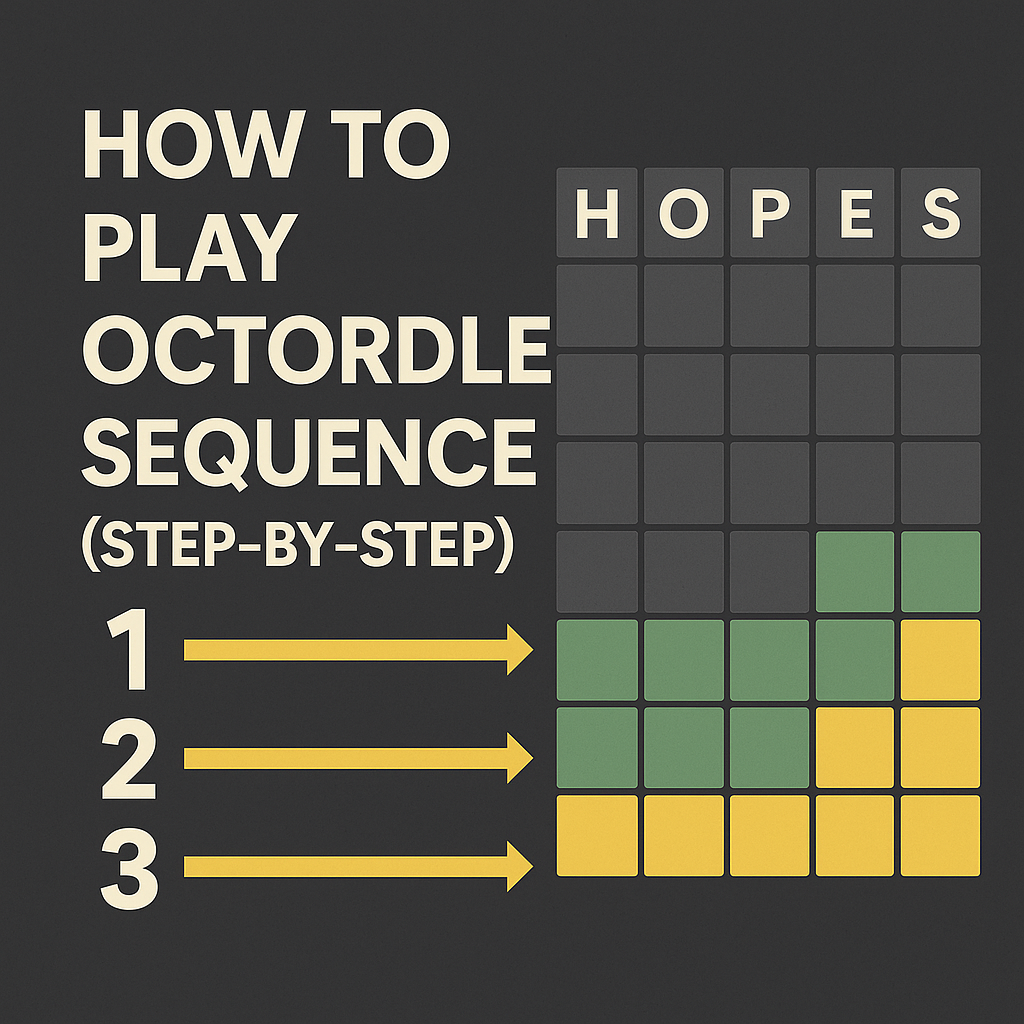
Step 1: Load the Octordle website
Most players use the official platform or third-party mirrors that archive daily puzzles.
Step 2: Select “Sequence” mode
This brings you directly to the first board (Puzzle 1).
Step 3: Enter your first guess
It applies ONLY to Puzzle 1. No multipliers, no shared feedback.
Step 4: Deduce the first word
Using color clues and elimination, solve board 1.
Step 5: Move to Puzzle 2
Once solved, the next grid appears — with your remaining guesses intact.
Step 6: Repeat until Puzzle 8
If you solve all eight boards without burning through your guess limit, you win.
It sounds straightforward, but the tension increases with each board. Your margin for error shrinks as you go deeper into the sequence.
Why Octordle Sequence Is More Difficult Than Classic Mode
Let’s compare the two:
| Feature | Octordle Classic | Octordle Sequence |
|---|---|---|
| Boards visible | All 8 at once | One at a time |
| Guess sharing | Every guess affects all boards | Each board is isolated |
| Information sharing | Very high | Limited |
| Difficulty type | Multi-tasking | Resource management |
| Strategy | Broad elimination | Focused deduction |
The real source of difficulty
In Classic mode, guesses give you clues across all eight words. A single high-information word like “AROSE” can uncover 20+ letters across the boards.
In Sequence mode, those same guesses only tell you about one word. You lose the efficiency that comes from simultaneous feedback.
This is why Sequence demands:
- smarter starting words
- gentler risk-taking
- careful vowel testing
- optimization of every guess
Where Classic mode allows for aggressive experimenting, Sequence punishes wasted guesses severely.
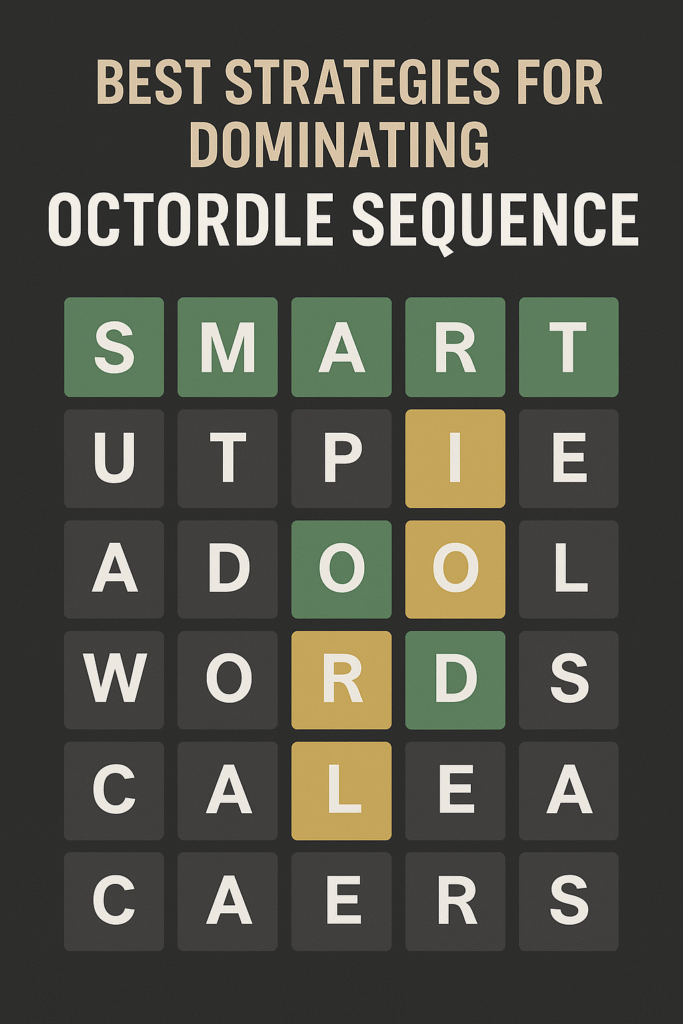
Best Strategies for Dominating Octordle Sequence
This is where the magic happens. If you want to win consistently, you need a smart game plan. Here are the most reliable, battle-tested methods.
1. Use high-information starter words
Your starter word should test:
- multiple vowels
- high-frequency consonants
- a balanced distribution of letters
Great examples include:
- ARISE
- AUDIO
- NOTES
- ALIEN
- CRATE
These words maximize early information while minimizing wasted guesses.
2. Avoid repeating letters early
Sequence mode is a marathon. Repeating letters like the “L” in “HELLO” early on reduces value.
Unless you already know a letter is in the word, avoid doubles until later.
3. Track eliminated letters carefully
Since you only see one board at a time, manual tracking helps.
A simple method:
- Write down or mentally note green positions
- Highlight yellow letters
- Cross off gray letters
- Keep a mental “used letter list”
This prevents you from forgetting eliminated consonants later in the sequence.
4. Save “fishing guesses” for when it counts
A fishing guess is a strategic probe using a word designed to expose new letters.
For example:
- CLING
- BURST
- DOWRY
These words test uncommon consonants and hidden vowels.
In Sequence mode, use fishing guesses:
- when you’re stuck
- when you have too many possibilities
- when the solution is narrowed but not obvious
5. Avoid low-value letters until necessary
Letters like:
Q, X, J, Z
should only be tested when you genuinely suspect them. Burning guesses on rare letters early is the fastest way to lose Puzzle 7 or Puzzle 8.
6. Use word pattern recognition
The more you play, the more you’ll recognize typical English word structures.
Examples:
- A_E
- __ING
- _R__E
- _IGHT
Sequence mode rewards pattern memory enormously.
7. Play conservatively in the early boards
You have eight puzzles to get through. Do not play Puzzle 1 like it’s the only one. Many players lose because they take risky shots too early.
- Use at least 2–3 guesses purely for information
- Avoid “hard-mode” jumps unless you’re certain
- Protect your guess buffer
By Puzzle 4–5, you’ll be glad you saved your guesses.
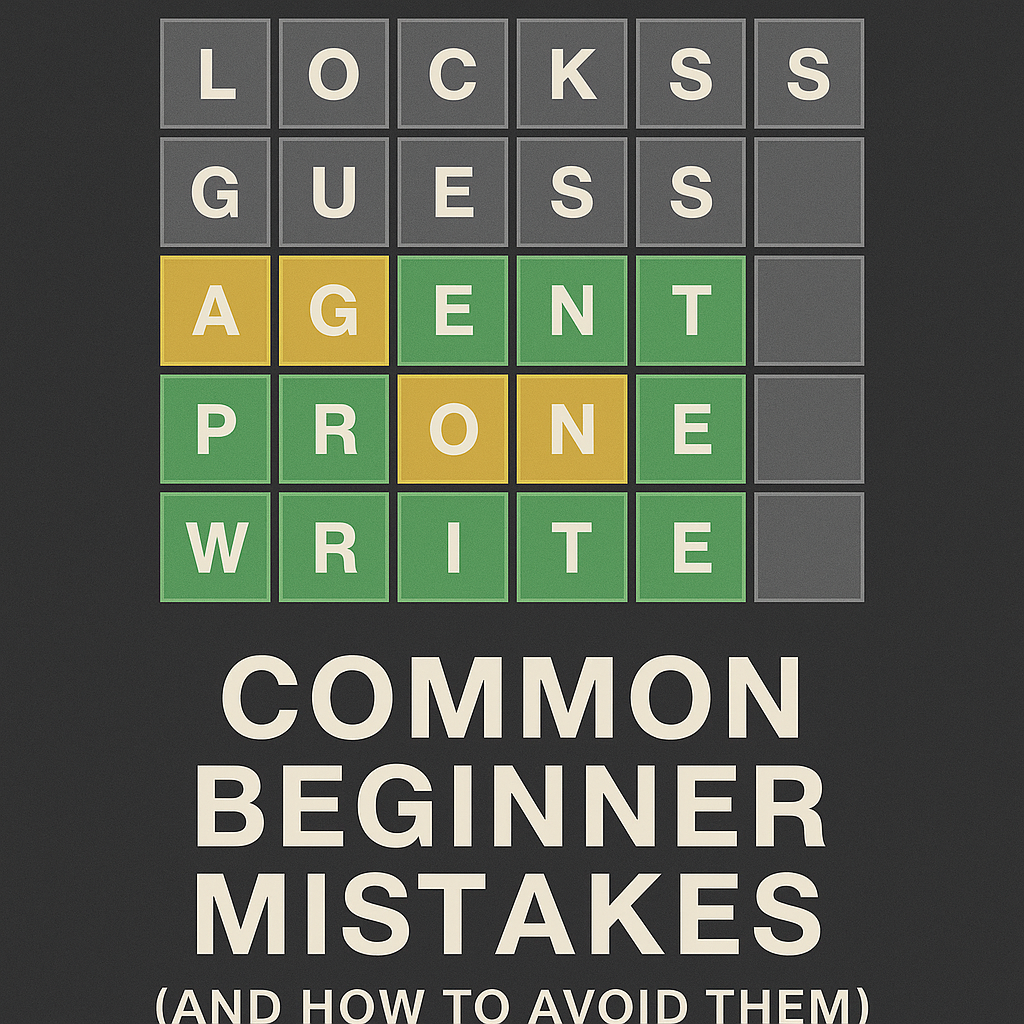
Common Beginner Mistakes (and How to Avoid Them)
Even great players struggle if they dive in without preparation. Here are the pitfalls that ruin most runs:
Mistake #1: Using the same guess-heavy tactics as Classic mode
Classic mode encourages cheap experimentation since every guess impacts eight grids.
Sequence mode does not.
Mistake #2: Burning too many guesses on the first word
Winning requires discipline. Always think long-term.
Mistake #3: Forgetting to test vowels early
Many English words hide vowels in tricky places. Missing a vowel early means disaster later.
Mistake #4: Overfishing
Fishing guesses help — but only when used sparingly.
Mistake #5: Getting stuck on uncommon word structures
Words ending with -CK, -TCH, -EGE, or beginning with THR- often trip up players.
Practice makes perfect here.
Why Octordle Sequence Keeps Players Coming Back
The charm of Sequence mode lies in its perfect balance of difficulty and satisfaction.
Here’s why players love it:
1. Predictable difficulty curve
Each board gets mentally harder as pressure builds.
2. It rewards growth
The more you play, the noticeably better you get.
3. It feels like solving a layered puzzle
Every solved word is a milestone, not just another tile turning green.
4. The final word is exhilarating
Reaching Puzzle 8 with 2–3 guesses left feels like boss-battle energy.
5. It’s a daily mental workout
Players enjoy the structured challenge, almost like a crossword gym session.
Is Sequence Mode Right for You?
Choose Sequence mode if:
- You love methodical puzzles
- You enjoy long-form challenges
- You like playing strategically rather than quickly
- You want a fresh twist on Wordle-style games
- You’re ready to graduate from Classic mode
Avoid it if you prefer fast, casual word puzzles — Sequence is slow-burn strategy at its finest.
Final Thoughts — Why Octordle Sequence Is One of the Best Modern Word Puzzles
Octordle Sequence takes the beloved Wordle formula and transforms it into something deeper, more tactical, and more rewarding. It strips away the comfort of multitasking and replaces it with a focused, disciplined challenge where every move matters.
Winning doesn’t rely on luck — it relies on mindset, technique, and growth.
For puzzle lovers, Sequence mode stands as one of the most satisfying daily word challenges available today. Whether you’re testing your vocabulary, pushing your cognitive limits, or simply enjoying the structure of its sequential gameplay, it’s a mode that doesn’t just entertain but also sharpens your linguistic instincts.
If you want a puzzle that challenges your brain and rewards your strategy, Octordle Sequence is absolutely worth mastering.
This article is published on Buz Vista, your hub for smart insights, gaming guides, and digital trends.
FAQs About Octordle Sequence
1. What is Octordle Sequence?
Octordle Sequence is a special mode in Octordle where you must solve eight five-letter words in a fixed order, unlocking one puzzle at a time. You cannot see the next puzzle until you solve the current one.
2. How is Sequence mode different from Classic Octordle?
In Classic mode, you see all 8 boards at once and each guess applies to all boards simultaneously.
In Sequence mode, each board is hidden until you solve the previous one — making it more strategic and intense.
3. How many guesses do I get in Sequence mode?
Most versions give players 15 total guesses to solve all eight words in order.
That’s your full budget, so every guess counts.
4. Is Octordle Sequence harder than normal Octordle?
Yes — significantly.
Since you can’t use one guess to gather info across all eight boards, Sequence demands smarter word choices and careful resource management.
5. What’s the best starting word for Octordle Sequence?
Great high-information starters include:
- ARISE
- AUDIO
- CRATE
- ALIEN
These test multiple vowels and common consonants to maximize early clues.
6. Can I use solvers or hints for Sequence mode?
Yes, many players use Octordle solvers or letter-input tools when stuck. Just remember it takes away some of the challenge — but it’s your game, your rules.
7. Why do people enjoy Sequence mode so much?
Players love it because:
- It feels like a level-by-level puzzle journey
- Each solved word is rewarding
- It sharpens vocabulary and logic
- The suspense of “What’s the next word?” keeps things fun
8. What are common mistakes beginners make?
Some frequent pitfalls include:
- Burning too many guesses on the first word
- Not testing vowels early
- Repeating letters too soon
- Making risky guesses without enough information
- Forgetting eliminated letters
9. Is Octordle Sequence good for beginners?
It’s better suited for players who already enjoy Wordle and Classic Octordle.
Beginners can still try it, but it has a steep learning curve.
10. How do I get better at Octordle Sequence?
Use smart starter words, avoid risky guesses early, rely on letter-frequency patterns, and keep track of eliminated letters.
Consistency beats luck in Sequence mode.