

Photo frames may seem like simple household items, but they play a surprisingly important role in how people preserve memories, decorate living spaces, and even tell personal stories. A photo on its own can be meaningful, but once it is placed inside a frame, it gains structure, protection, and presence. Frames give images a boundary, helping them stand out rather than blend into the background of daily life.
Think about a printed photo sitting loose in a drawer. It may hold emotional value, but it is rarely seen. Place that same photo in a frame on a desk or wall, and suddenly it becomes part of the room’s atmosphere. This is why photo frames continue to be relevant, even in a time when most images live on phones and cloud storage.
At Buz Vista, topics like these matter because they sit at the intersection of practicality and emotion. Photo frames are not luxury items, nor are they purely decorative. They are everyday objects that quietly support how people organize their spaces and reflect their identities.
From family portraits and travel memories to artwork and certificates, photo frames provide a consistent way to display what matters most without overwhelming the viewer.
How Photo Frames Work Beyond Decoration
While photo frames are often associated with home décor, their function goes beyond aesthetics. A well-designed frame balances visual appeal with protection and usability.
Protection and Longevity
One of the primary purposes of a photo frame is protection. Printed photos are vulnerable to several types of damage:
- Dust and dirt buildup
- Accidental bending or tearing
- Moisture exposure
- Light-related fading over time
A frame creates a physical barrier between the photo and the surrounding environment. Even basic frames help reduce everyday wear, while more thoughtfully designed frames can slow down aging caused by light and air exposure. This is especially useful for photos that hold sentimental value, such as family milestones or keepsakes.
Visual Structure and Focus
Frames also guide the viewer’s eye. Without a border, an image can feel unfinished or visually lost against a wall or shelf. A frame gives the photo a clear edge, helping the viewer focus on the content inside rather than the surrounding space.
This is similar to how margins work in a book. The text does not change, but proper spacing makes it easier to read and appreciate. Photo frames serve a similar role for visual content.
Emotional Anchoring
People often underestimate how much framed photos influence the feeling of a space. A room with thoughtfully placed frames tends to feel warmer and more personal than one without. This is not about filling every wall, but about choosing a few meaningful images and giving them a permanent place.
In shared spaces, framed photos can also create subtle conversation points. They quietly communicate personal history, values, or creative interests without needing explanation.
Types of Photo Frames and How to Choose the Right One
Not all photo frames serve the same purpose. The right choice depends on where the frame will be placed, what it will display, and how often the photo might be changed.
Materials and Their Practical Impact
Frames are commonly made from wood, metal, or composite materials. Each option offers a different balance of durability, weight, and visual tone.
- Wood frames tend to feel warm and traditional. They work well in living rooms, bedrooms, and spaces where comfort matters more than sharp lines.
- Metal frames usually feel more modern and minimal. Their thinner profiles can make photos appear clean and structured.
- Composite or synthetic frames are often lightweight and cost-effective, making them practical for gallery walls or frequent photo changes.
Choosing a material is less about status and more about context. A lightweight frame may be ideal for a rented space, while a heavier one may suit a permanent display.
Sizes and Proportions
Frame size affects how a photo is perceived. Smaller frames feel intimate and personal, while larger frames command attention. The 8×10 size, for example, is popular because it balances visibility with flexibility. It is large enough to show detail but small enough to fit desks, shelves, or grouped wall displays.
An 8×10 frame can also serve multiple purposes depending on orientation. Portrait orientation works well for individual subjects, while landscape orientation suits group photos or scenic shots.
Mats and Visual Breathing Room
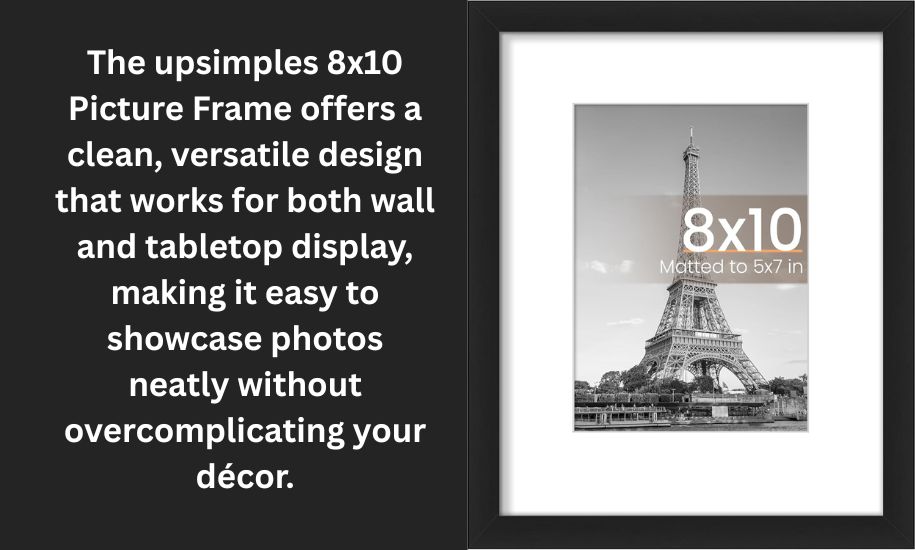
Some frames include a mat, which is the border between the photo and the frame itself. Mats are not just decorative; they give the image breathing room. This can make a photo feel more intentional and less crowded.
For example, placing a smaller photo inside a larger frame with a mat can elevate its presence without requiring a larger print. This is useful when working with standard photo sizes or limited wall space.
Everyday Use and a Practical Product Example
Photo frames are most effective when they fit naturally into daily life. Ease of use, flexibility, and simple design often matter more than elaborate detailing.
Versatility in Display
Frames that allow both tabletop and wall display offer greater flexibility. A photo that starts on a desk can later move to a wall without needing a new frame. This adaptability makes it easier to refresh spaces over time.
Frames that support both vertical and horizontal orientation also reduce limitations. Photos change, preferences evolve, and a frame that adapts keeps pace with those changes.
A Practical Example: upsimples 8×10 Picture Frame
The upsimples 8×10 Picture Frame is a useful example of how modern photo frames are designed for everyday convenience. It supports displaying an 8×10 photo directly or a smaller image with a mat, offering flexibility without complexity.
Its simple design allows it to blend into various spaces rather than dominate them. This makes it suitable for:
- Home offices and desks
- Living room shelves
- Bedroom side tables
- Coordinated wall displays
The ability to open the backing easily also matters more than people expect. Frames that make photo changes simple encourage users to update displays rather than leaving them unchanged for years.
This kind of design reflects a broader trend in home items: practical, neutral, and adaptable rather than overly stylized.
Styling Photo Frames in Real Living Spaces
How frames are arranged often matters more than the frames themselves. A thoughtful layout can make even simple frames feel intentional and polished.
Wall Displays Without Overcrowding
Gallery walls are popular, but they do not need to be complex. A small group of frames in the same size or color can look cleaner than a crowded mix. Consistency helps the viewer focus on the images rather than the arrangement.
Spacing is also important. Leaving enough space between frames prevents visual clutter and gives each photo its own presence.
Tabletop and Shelf Placement
Frames placed on desks, shelves, or cabinets work best when they are balanced with other objects. Pairing a frame with a small plant or book stack creates a natural grouping without drawing too much attention to any single item.
Angled placement can add depth, especially on shelves where everything else sits upright. This small variation keeps the display from feeling flat.
Rotating Photos Over Time
Frames do not need to be permanent. Rotating photos seasonally or during life changes keeps spaces feeling fresh. Frames that are easy to open support this habit, turning photo displays into evolving reflections of life rather than static decorations.
This approach also reduces the pressure to choose “perfect” photos. Knowing that images can be swapped makes the process more relaxed and personal.
Photo Frames as Quiet Storytellers
Photo frames rarely demand attention, but they quietly influence how people experience their spaces. They protect memories, shape visual environments, and offer moments of reflection during ordinary days.
In a world dominated by screens, physical photo frames provide something different. They slow things down. They encourage people to pause, remember, and reconnect with moments that might otherwise stay buried in digital folders.
Whether it’s a single 8×10 frame on a desk or a small collection on a wall, the value of photo frames lies in their simplicity. They do not need to be elaborate or expensive to be meaningful. They only need to do their job well.
For readers at Buz Vista, this balance of function and feeling is what makes everyday objects worth paying attention to. Photo frames are a reminder that small, thoughtful choices can quietly improve how spaces feel and how memories live on.
Conclusion
Photo frames continue to hold a steady place in homes and workspaces because they solve a simple but important need. They protect images, give structure to personal memories, and help people shape environments that feel familiar and intentional. From choosing the right size and material to placing frames thoughtfully, small decisions can make a lasting difference. Whether using a versatile option like an 8×10 frame or creating a modest display, photo frames remain one of the most accessible ways to bring meaning into everyday spaces.