

The name Princess Fianna carries a quiet sense of mystery and strength that immediately attracts fantasy readers. While she is not a historical royal figure, Princess Fianna exists as a powerful fictional identity shaped by mythology, anime culture, and modern fantasy storytelling. Over time, the name has appeared across different creative worlds, each giving it new meaning while preserving its noble essence. As a result, Princess Fianna has become a recognizable fantasy concept rather than a single fixed character.
To understand Princess Fianna properly, it is essential to explore both the cultural roots of the name and the fictional narratives that brought it into popularity. The word “Fianna” originates from Irish mythology, where it referred to elite warrior bands known for bravery, loyalty, and honor. These warriors lived by a strict moral code and were admired for their strength and independence. Although “Fianna” was never a personal name in its original form, modern fantasy creators adopted it because of its strong mythological weight. When combined with the title “Princess,” the name transforms into a symbol of royal power balanced with a warrior spirit.
In modern entertainment, one of the most recognized representations linked to Princess Fianna comes from Japanese anime and light novels. The character Fianna Ray Ordesia from Blade Dance of the Elementalers is often associated with the title Princess Fianna by fans. She is portrayed as a royal born into the Ordesian Empire, raised from childhood to become a future queen. Her life initially appears perfect, shaped by privilege, discipline, and expectation. However, her fate changes dramatically when she loses the ability to summon spirits, a skill that defines status and power in her world.
This loss causes her fall from royal favor and leads to isolation, emotional pain, and public humiliation. Despite her royal blood, Fianna is treated as an outcast, earning the nickname “Lost Queen.” What makes her story compelling is not the fall itself, but the way she responds to it. Instead of surrendering to despair, she slowly rebuilds her identity through perseverance, friendship, and inner resolve. Her journey reflects a deeper message found in many modern fantasy stories: true strength is revealed not through power, but through resilience.
Princess Fianna’s personality is often portrayed as gentle yet emotionally complex. She is compassionate, intelligent, and playful on the surface, yet deeply affected by feelings of failure and self-doubt. This emotional depth makes her relatable to audiences, especially those who appreciate character-driven storytelling. Unlike traditional fairy-tale princesses who are protected by destiny, Princess Fianna must confront loss, rebuild confidence, and redefine her sense of worth.
Beyond anime, the name Princess Fianna also appears in classic fantasy literature such as Record of Lodoss War. In this universe, Princess Fianna is a royal figure placed at the center of political tension and diplomacy. She is offered as a symbolic sacrifice to maintain peace between rival powers, showing how royalty is often used as a tool in larger conflicts. Yet she is not portrayed as weak or passive. Instead, she demonstrates courage, dignity, and emotional strength, reinforcing the idea that nobility lies in character rather than authority.
Across different interpretations, Princess Fianna represents a modern evolution of the princess archetype. She is no longer just a symbol of beauty or romance, but a reflection of leadership, sacrifice, and emotional intelligence. Her role often emphasizes healing, support, and unity rather than brute force. This makes her especially relevant in contemporary fantasy, where audiences seek meaningful character development instead of shallow perfection.
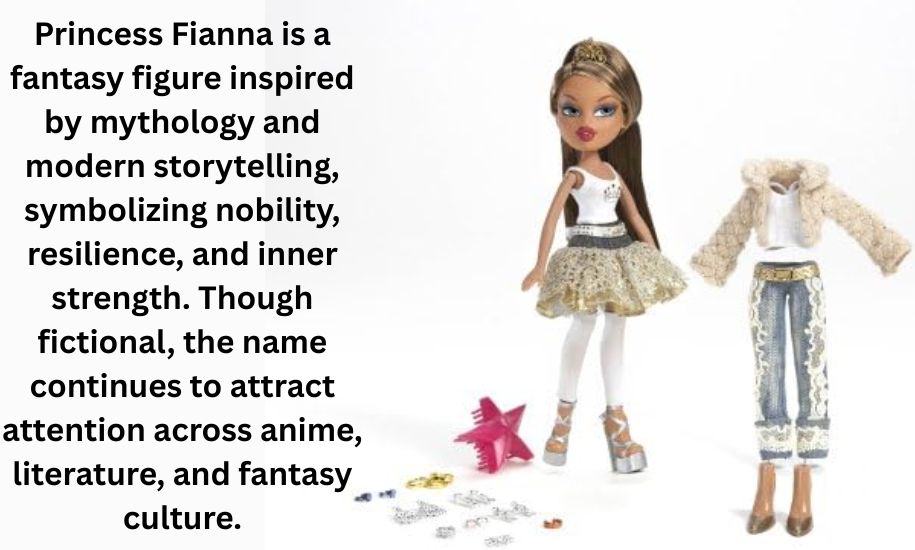
The popularity of Princess Fianna has also extended into pop culture and creative spaces. The name has been used in fashion dolls, digital artwork, fan fiction, and role-playing games. Artists and writers often choose the name because it sounds elegant, mythical, and powerful at the same time. These creative interpretations allow Princess Fianna to exist as a flexible fantasy identity, adaptable to different stories and visual styles.
One reason the keyword “princess fianna” attracts so much interest online is its ambiguity. Readers searching for it may be anime fans, fantasy lovers, writers seeking inspiration, or casual readers curious about the name’s origin. This broad appeal makes Princess Fianna an ideal topic for blogs focused on entertainment, storytelling, and fantasy culture. She exists at the intersection of myth, imagination, and modern media.
Symbolically, Princess Fianna represents feminine strength rooted in emotional depth. Her character often reflects the struggles of identity, expectation, and self-worth. She shows that leadership does not always come from dominance, but from empathy and understanding. In many stories, she becomes a stabilizing presence, supporting others while quietly carrying her own burdens. This balance makes her a powerful figure for modern audiences who value realistic and emotionally rich characters.
Another important aspect of Princess Fianna is how her story continues to evolve. Because she is not tied to a single fixed narrative, creators can reinterpret her across different worlds while maintaining her core essence. Whether she is a fallen queen, a diplomatic princess, or a symbolic fantasy heroine, Princess Fianna consistently represents grace under pressure and strength through adversity.
In fan communities, Princess Fianna is often reimagined in original stories and artwork. Writers use her name for original characters in fantasy novels, while gamers adopt it for role-playing avatars. This ongoing creative engagement ensures that the name remains relevant and continues to grow in meaning. Princess Fianna becomes less of a single character and more of a shared fantasy concept shaped by collective imagination.
In modern fantasy storytelling, characters like Princess Fianna matter because they reflect changing values. Audiences now look for authenticity, emotional realism, and personal growth. Princess Fianna embodies these qualities, proving that a character does not need overwhelming power to be compelling. Her strength lies in endurance, compassion, and the ability to rise after loss.
In conclusion, Princess Fianna stands as a fascinating blend of mythological inspiration and modern fantasy storytelling. Though she does not belong to one historical legend, her presence across anime, literature, and popular culture makes her a meaningful figure worth exploring. She represents the idea that true royalty is defined not by crowns or magic, but by character and resilience. For readers and fantasy enthusiasts, Princess Fianna remains a timeless symbol of quiet strength and inner nobility, making her a perfect subject for thoughtful content on platforms like Buz Vista.
Frequently Asked Questions (FAQs)
Who is Princess Fianna?
Princess Fianna is a fictional fantasy figure associated with mythological inspiration, anime culture, and modern storytelling. She is not a historical princess but a symbolic character often used to represent nobility, emotional strength, and resilience across different fantasy narratives.
Is Princess Fianna a real historical person?
No, Princess Fianna is not a real historical figure. The name is derived from mythology and fiction, especially Irish mythological influences and Japanese anime and fantasy literature. Her identity exists purely within creative and fictional contexts.
Is Princess Fianna related to anime?
Yes, Princess Fianna is commonly associated with anime through the character Fianna Ray Ordesia from Blade Dance of the Elementalers. Although the title “Princess Fianna” is a fan-adapted reference, the character’s royal background and storyline strongly connect her to this name.
What does the name Fianna mean?
The name Fianna comes from Irish mythology, where it referred to elite warrior groups known for bravery and loyalty. In modern fantasy, the name is used as a personal name to symbolize strength, honor, and a warrior spirit combined with nobility.
Why is Princess Fianna popular in fantasy culture?
Princess Fianna is popular because she represents a modern version of royalty. Instead of being defined by beauty or romance, she embodies emotional depth, perseverance, and inner power. This makes her relatable to modern audiences who value strong, realistic characters.
Is Princess Fianna used in books or literature?
Yes, variations of Princess Fianna appear in fantasy literature such as Record of Lodoss War, where a princess named Fianna plays a diplomatic and emotional role. The name is also widely used in fan fiction and original fantasy writing.
Is Princess Fianna a strong character?
Princess Fianna is considered strong not because of physical dominance, but because of her emotional resilience and personal growth. Her strength lies in overcoming loss, accepting responsibility, and supporting others during difficult times.
Why do people search for “Princess Fianna” online?
People search for Princess Fianna because the name appears across multiple fantasy sources, including anime, literature, and creative projects. The mystery around her identity and origins makes readers curious and drives online interest.
Can Princess Fianna be considered a fantasy archetype?
Yes, Princess Fianna functions as a fantasy archetype representing the fallen or tested royal who regains purpose through inner strength. She reflects themes of redemption, leadership, and emotional intelligence common in modern fantasy stories.
Is Princess Fianna used in fan art and creative works?
Princess Fianna is frequently used in fan art, digital illustrations, role-playing games, and original fantasy stories. Creators are drawn to the name because it sounds elegant, mythical, and powerful, allowing flexible interpretation.