

Overview
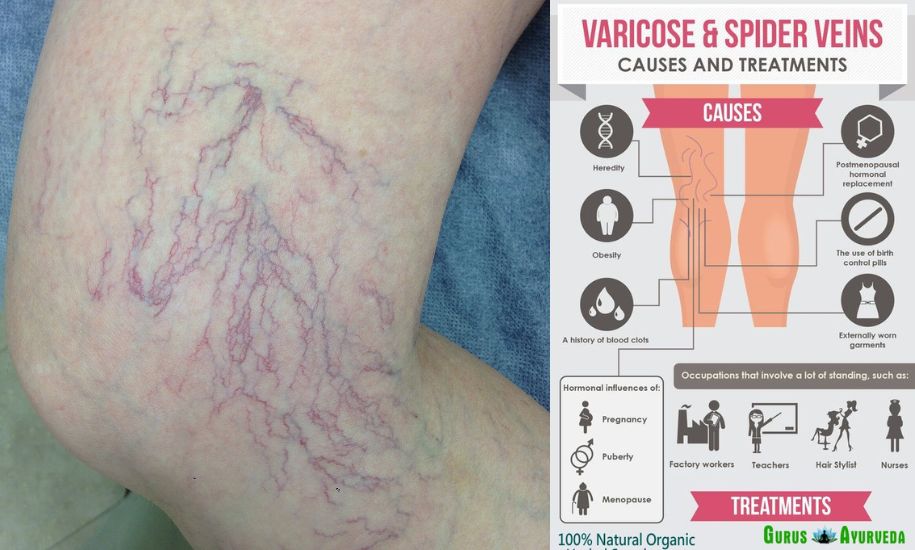
Spider veins develop when very small blood vessels near the skin’s surface become damaged and start to show through. They often appear as red, blue, or purple lines that may resemble spider webs or tree branches. While they can develop anywhere on the body, spider veins are most commonly found on the legs and sometimes on the face. For most people, spider veins are harmless and primarily a cosmetic concern, though they can occasionally cause mild discomfort.
Symptoms and Causes
Spider veins usually do not cause noticeable symptoms. In some cases, people may experience:
- Burning or itching
- Mild pain or cramping in the legs
- Tired or heavy-feeling legs
These veins form when tiny blood vessels weaken, expand, and become visible on the skin. Some common factors that contribute to spider veins include:
- Hormonal changes, such as during pregnancy or menopause
- Genetics or family history of vein problems
- Injury or trauma to the skin
- Prolonged sitting or standing
- Obesity or excess body weight
- Sun exposure or use of tanning beds
- Hormone therapy or birth control
Risk Factors
Various factors may increase the risk of developing spider veins.
- Age, as blood vessels naturally weaken over time
- Female gender, especially due to hormonal changes
- Family history of spider veins or varicose veins
- Sedentary lifestyle or long periods of standing
- Smoking or previous smoking history
Spider Veins vs. Varicose Veins

Though often confused, spider veins and varicose veins are different. Spider veins affect small blood vessels like capillaries and venules. Varicose veins involve larger veins, which can bulge and cause pain or discomfort. Many people have both conditions, as they share similar causes and risk factors.
Diagnosis
To identify spider veins, a healthcare provider typically performs a physical examination and reviews your medical and family history. If necessary, further testing may be done to ensure there are no underlying vein problems.
Treatment Options
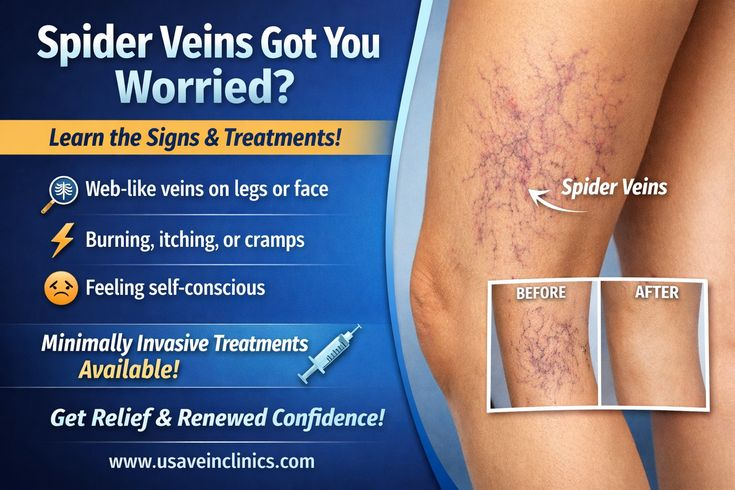
Treatment is generally optional and often pursued for cosmetic reasons, though some people seek relief from minor discomfort. Common treatments include:
- Sclerotherapy
A minimally invasive procedure where a solution is injected into the affected veins to close them off. Spider veins usually fade over several weeks, and multiple sessions may be needed for full results. - Laser Therapy
A noninvasive method using focused light to heat and destroy the veins. This is often used for facial spider veins or small leg veins. Visible improvement may occur within weeks, though larger veins may take a few months.
Outlook
Spider veins are rarely dangerous and typically do not lead to serious health problems. Treatment is effective in removing visible veins, but new spider veins can appear over time. Maintaining healthy lifestyle habits can reduce the likelihood of recurrence.
Prevention
While not all spider veins can be prevented, several steps can reduce risk:
- Avoid sitting or standing for long periods without breaks
Exercise regularly to improve circulation - Maintain a healthy weight.
- Wear loose clothing that does not restrict blood flow
- Elevate your legs periodically to reduce pressure on veins
- Consider compression stockings if recommended by a healthcare provider
Living with Spider Veins
Even if you choose not to undergo treatment, lifestyle changes can help reduce discomfort and prevent new veins from forming. Incorporating regular movement, a balanced diet, and leg elevation can improve overall vein health.
When to Seek Care
Consult a healthcare professional if:
- A vein appears swollen, red, or warm to the touch
- Skin changes, sores, or rashes develop
- Pain or other symptoms interfere with daily activities
- You May Also Read : 23 Surprising Signs You May Have Grown Up With Ehlers-Danlos
Conclusion
Spider veins are common and usually harmless, though they can be a cosmetic concern for many. Treatment options are available and effective, and lifestyle adjustments can help prevent new veins from forming. By understanding the causes and practicing preventive habits, you can maintain healthy veins and feel more confident in your skin.
Spider Veins FAQs
Q1: What causes spider veins?
A: Spider veins develop when tiny blood vessels under the skin weaken or become damaged. Factors include genetics, hormonal changes, prolonged sitting or standing, obesity, and sun exposure.
Q2: Are spider veins dangerous?
A: In most cases, spider veins are harmless and only a cosmetic concern. Rarely, they may indicate an underlying vein problem, so it’s best to consult a healthcare provider if you notice other symptoms.
Q3: Can pregnancy cause spider veins?
A: Yes, hormonal changes and increased blood volume during pregnancy can make small blood vessels more visible, leading to spider veins.
Q4: How can I prevent spider veins?
A: Preventive measures include regular exercise, maintaining a healthy weight, avoiding long periods of standing or sitting, wearing loose clothing, and elevating your legs periodically.
Q5: What treatments are available for spider veins?
A: Common treatments include sclerotherapy (injection-based therapy) and laser therapy. These procedures help reduce or eliminate visible veins.
Q6: Do spider veins go away on their own?
A: Spider veins rarely disappear without treatment. While they are usually harmless, professional treatment or lifestyle changes are needed for cosmetic improvement.
Q7: Are spider veins the same as varicose veins?
A: No. Spider veins are smaller, superficial blood vessels, while varicose veins are larger, bulging veins that can cause discomfort or pain.